
Your brain wasn’t designed to track time by watching numbers disappear. We’ve all felt the mounting anxiety of a digital countdown or the subtle embarrassment of glancing at a smartphone during a session. It’s distracting. It breaks presence. It signals to everyone in the room that the clock is more important than the human connection. Finding a visual countdown timer professional enough for a boardroom or a therapy office requires moving beyond consumer-grade apps and ticking mechanical clocks.
Professional environments demand tools that respect the biological limitations of human attention. You shouldn’t have to choose between keeping a schedule and maintaining focus. This guide explores why hardware-based light timers are the superior choice for 2026. You’ll discover how to achieve effortless time awareness through peripheral vision and subconscious processing. We’ll compare the leading professional models to help you remove cognitive friction and create a distraction-free environment where focus and mental well-being take center stage. By the end, you’ll understand how to transform time management from a source of stress into a silent, supportive partner.
Key Takeaways
- Hardware-based timers communicate time through light to eliminate the subconscious anxiety triggered by disappearing numbers.
- A visual countdown timer professional tool leverages peripheral vision, allowing you to stay present without breaking eye contact or focus.
- Light-based hardware outperforms mechanical and digital alternatives by removing auditory distractions and the friction of screen-based notifications.
- Choosing the correct tool requires assessing your specific environment, whether you need specialized presets for therapy or custom branding for corporate meetings.
- Adopting screen-less timing technology signals professional intentionality and prioritizes the mental space of everyone in the room.
What is a Professional Visual Countdown Timer?
A professional visual countdown timer is a dedicated hardware instrument designed to communicate the passage of time through non-numerical stimuli. It’s distinct from the standard digital clocks found on smartphones or computers. While a basic What is a timer? typically relies on digits or ticking hands, these professional devices use light and color to provide a subconscious sense of duration. The primary objective is to offer clarity without causing a distraction. In 2026, the professional standard has shifted toward tools that respect the user’s mental health and cognitive space. High-stakes environments like executive boardrooms and therapy suites require solutions that eliminate the anxiety of watching seconds slip away.
A visual countdown timer professional grade device leverages the human brain’s innate ability to monitor changes in the periphery. It removes the friction of “active checking.” When you look at a traditional clock, your focus breaks. You stop listening to your client or colleague to process a number. Light-based hardware allows you to maintain a state of flow. You perceive the time remaining through a change in the environment’s atmosphere rather than a conscious calculation. This creates a stress-free environment where time management becomes a background process rather than a source of pressure.
The Shift from Classroom Tools to Executive Hardware
Historically, visual timers were associated with primary school classrooms. These early models often used high-contrast, aggressive colors like bright red disks to grab a child’s attention. While effective for basic time-tracking, these visual cues often trigger a cortisol response in high-pressure adult environments. Modern professionals require minimalist designs that complement sophisticated office aesthetics. The 2026 executive standard focuses on subtle gradients and calming colors that integrate into the room’s decor. Moving away from “stress colors” allows for a more intentional and tranquil session. Investing in a visual countdown timer professional solution signals to clients that their time is valued and their focus is protected.
Key Characteristics of Professional-Grade Timers
Durability and material quality define the gap between consumer toys and professional tools. Executive hardware utilizes high-quality finishes and robust builds that stand up to daily use in busy practices. Silence is a mandatory feature. Any audible ticking or digital hum can disrupt deep work and destroy the rapport built during therapeutic sessions. Non-intrusive signaling ensures that the transition between time phases is smooth. For practitioners using specialized tools like Timeqube for Mind/Body Therapies, this means light transitions are designed to be felt rather than seen. These characteristics ensure the device remains a symbol of professional intentionality, helping users manage their time without sacrificing their presence or focus.
The Science of Subconscious Time Management
The human brain is hardwired to prioritize environmental shifts. Human peripheral vision is highly sensitive to changes in light and color. Unlike the central fovea, which handles high-resolution tasks like reading text, the periphery monitors our surroundings for movement and signals. Digital clocks demand “active checking.” This process forces the brain to switch from a creative or social task to a computational one. It breaks the flow state. It increases cognitive load. A visual countdown timer professional solution bypasses this interruption. It allows the brain to track time in the background. You stay present during the dialogue. You don’t lose the thread of the conversation.
Scientific research supports this transition from active to passive awareness. The Science of Visual Timers demonstrates how concrete visual cues reduce anxiety and improve on-task behavior. By making time a physical presence, the brain no longer struggles to visualize the remaining duration. This is why visual cues beat digital clocks in high-stakes professional environments. The cognitive energy saved can be redirected toward critical thinking and empathy. It’s a matter of biological efficiency. Developing genuine time awareness for professionals means offloading duration tracking to the subconscious, freeing the mind for higher-order thinking.
Peripheral Awareness vs. Central Focus
Verbal dialogue requires intense central focus. When you look at a clock, you physically and mentally detach from the speaker. In a professional setting, this is a social micro-aggression. It signals that the schedule is more important than the individual. Light signals are processed subconsciously. They don’t interrupt the dialogue. This “glance-free” advantage preserves the human connection. It also reduces the “urgency” hormone response. Flashing numbers or ticking hands trigger a mild stress reaction. Soft light transitions do not. You maintain a sense of calm authority throughout the session.
Why Light Beats Mechanical Disks
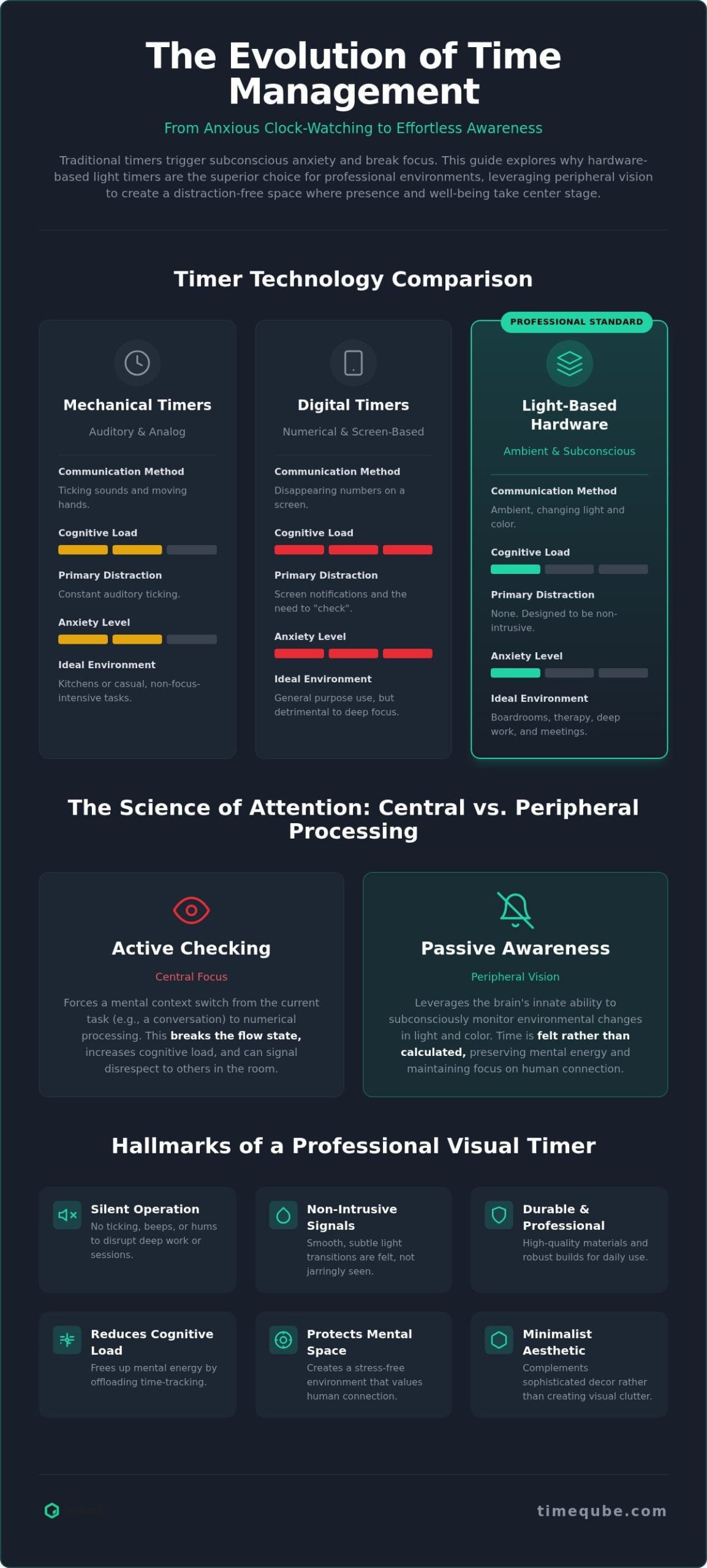
Mechanical disks use disappearing shapes to show time. While an improvement over numbers, they still require a conscious glance to gauge the “slice” remaining. Light-based systems are fundamentally different. They change the atmosphere of the entire room. Color-coded signals, such as Green, Amber, and Red, map to primal human instincts for safety and caution. Green signifies safe flow. Amber signals a transition. Red indicates a conclusion. These signals are recognized instantly without conscious thought. Industry professionals report that light-based timers significantly reduce meeting-related anxiety. For those seeking a visual countdown timer professional enough for an executive suite, the shift to light is a shift toward biological harmony.
Consider how a professional meeting timer could restore the focus of your next session by working with your biology rather than against it.
Comparison: Mechanical vs. Digital vs. Light-Based Hardware
Choosing the right medium for time awareness is a strategic decision. In 2026, professionals typically choose between mechanical devices, digital applications, and light-based hardware. Each category offers a distinct psychological experience. For high-stakes environments like therapy or executive coaching, the choice affects the quality of the human connection. A visual countdown timer professional enough for these spaces must prioritize the removal of friction. Hardware solutions consistently outperform software and mechanical alternatives by addressing the biological needs of the user.
The evaluation of these tools rests on three pillars: Distraction Level, Professionalism, and Ease of Use. Digital apps often fail due to high cognitive load. Mechanical timers fail due to sensory intrusion. Light-based hardware, however, provides a seamless integration into the professional environment. This comparison is vital for those optimizing specific productivity workflows. If you’re implementing structured focus sessions, the Physical Pomodoro Timer for Work: The 2026 Comparison Guide provides a deeper look at why physical tools beat digital interfaces for deep work.
The Hidden Cost of ‘Free’ Timer Apps
Software-based timers are often perceived as convenient. However, they carry a hidden cognitive tax. The notification trap is a primary concern. Checking a phone for a timer often leads to ten minutes of unintentional email or social media scrolling. Beyond personal distraction, there’s the “phone-on-table” problem. Placing a mobile device between you and a client signals unavailability. It suggests that you’re one ping away from leaving the present moment. Reliability is another factor. Battery drain or unexpected software updates can derail a professional session without warning. A dedicated visual countdown timer professional grade device ensures the tool is always ready and the phone stays out of sight.
Mechanical Timers: Great for Kids, Tough for Pros
Mechanical timers are effective in K-12 classrooms but struggle in the boardroom. The audible ticking is a primary deterrent. In professional settings, silence is non-negotiable. Ticking creates a sense of impending doom rather than calm awareness. It forces the brain to monitor the passage of time through sound, which is highly intrusive. There are also durability concerns. Moving mechanical parts eventually wear down or break. Solid-state hardware offers a much longer lifespan. Finally, there’s the aesthetic mismatch. Primary-colored plastic disks look out of place in a sophisticated office. Professional hardware should feel like a piece of high-end decor, projecting an aura of intentionality and minimalist elegance.
Choosing the Right Timer for Your Specific Environment
Selecting a visual countdown timer professional grade tool depends on the psychological landscape of your workspace. Every environment has unique cognitive requirements. A high-pressure boardroom demands different signals than a private therapy session. You must first identify your primary objective. Is the goal to foster deep empathy or to drive meeting efficiency? Assessing the need for brand integration and the specific durations required will guide your choice. In 2026, professional time management is about matching the tool to the human intent behind the session.
The Therapist’s Suite: Empathy and Presence
In the therapy suite, the priority is the human connection. A ticking clock or a sudden digital alarm breaks the therapeutic container. It signals a shift from empathy to logistics. Using a silent, light-based tool like Timeqube for Mind/Body Therapies ensures that the focus remains entirely on the client. Gentle color transitions provide a subtle, subconscious cue that the session is concluding. This avoids the jarring interruption of a standard timer. The physical presence of the device creates a shared space of time awareness. Both therapist and client understand the rhythm of the hour without the social friction of checking a phone. This transparency builds rapport and reduces the anxiety of the unknown end time.
The Executive Boardroom: Efficiency and Branding
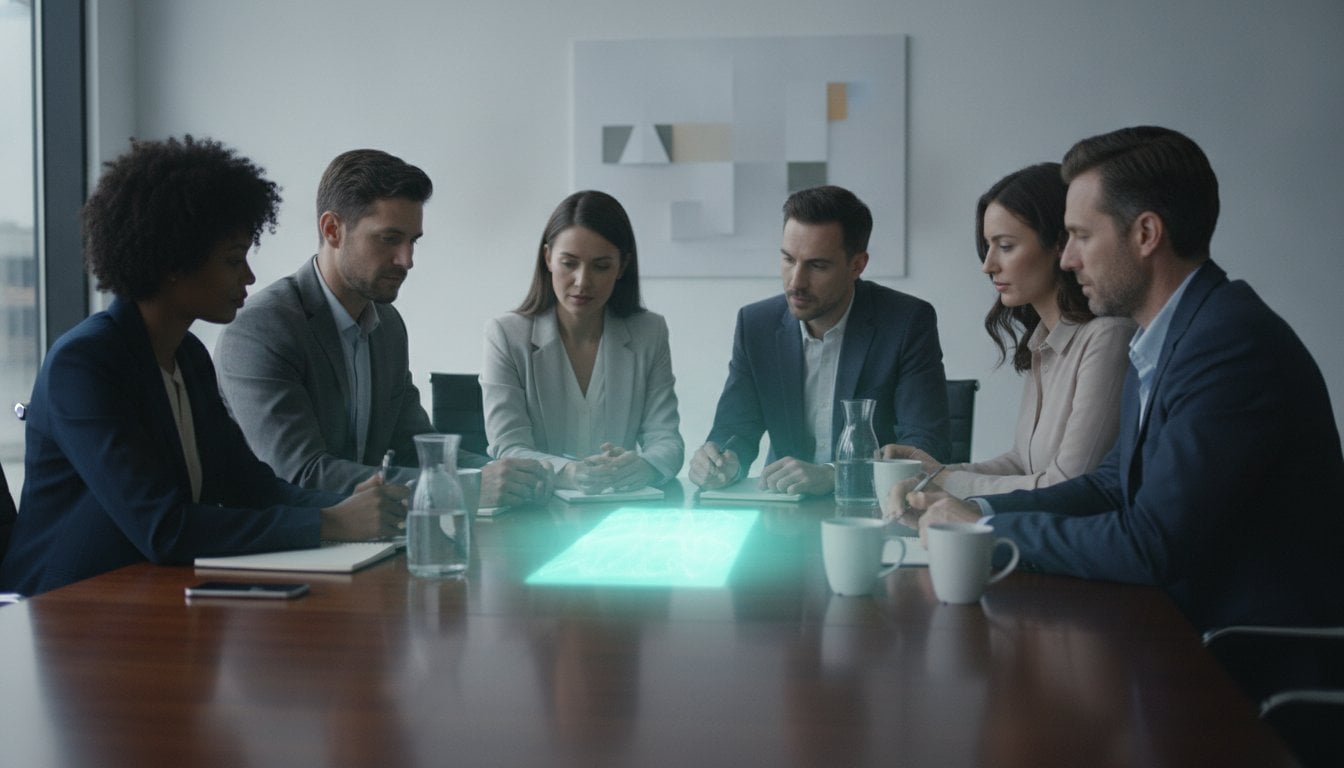
In the boardroom, time is a strategic corporate asset. Utilizing Timequbes with Your Logo reinforces a culture of professional intentionality. It signals to stakeholders that the organization values focus and mental space. These devices effectively manage the long-winded speaker problem. A verbal interruption is often perceived as confrontational or rude. An objective, changing light signal provides a neutral cue to wrap up. It removes the personal friction from time management. A sleek, physical device on the conference table acts as a silent moderator. It reminds participants that time is a finite, respected resource. This approach improves meeting efficiency while maintaining professional harmony.
Consider the cognitive diversity of your team as well. For many individuals, traditional numerical clocks are sources of distraction rather than clarity. You can explore how visual cues support different processing styles in our guide on Time Management for Neurodiversity. Whether you need fixed intervals for standard sessions or customizable presets for deep work, the right tool should remove friction from your day. If you’re ready to elevate your professional environment, explore our professional meeting solutions to find the perfect fit for your office.
Why Timeqube is the Professional Standard in 2026
Timeqube represents the pinnacle of intentional time management. It is the only visual countdown timer professional enough to meet the aesthetic and psychological demands of the modern executive suite. By adhering to a strict ‘Zero-Distraction’ philosophy, it eliminates the cognitive friction inherent in other tools. There are no screens to induce eye strain, no apps to trigger notification loops, and no ticking to disrupt the silence of a therapeutic session. It’s a hardware-only solution that prioritizes the user’s mental space above all else. Busy professionals appreciate the tap-to-start functionality, which allows for immediate focus without the need to navigate complex menus.
Minimalist Design Meets Cognitive Psychology
The cube form factor is a deliberate choice in cognitive design. It fits seamlessly on an executive desk or a therapy table, acting as an unobtrusive ally rather than a focal distraction. High-quality RGB LEDs ensure that the color signals remain clear even in brightly lit professional offices. Beyond simple time-tracking, the device provides an ‘Atmosphere’ factor. The soft glow contributes to a tranquil office mood, subtly signaling to everyone present that the session is a protected, intentional space. This creates an environment where time is perceived subconsciously, maintaining the flow of the meeting.
A Tool Built for Longevity and Focus
Longevity is a core requirement for professional tools. Timeqube utilizes solid-state hardware, meaning there are no moving parts to wear down or produce noise. This ensures total silence and a long operational lifespan compared to mechanical alternatives. For practitioners managing back-to-back sessions, the extended battery life removes charging anxiety. Perhaps most importantly, the presence of the device creates a powerful psychological ‘trigger’ effect. Over time, the brain associates the sight of the cube with the commencement of deep work or active listening. It primes the mind for focus before the session even begins.
Choosing a visual countdown timer professional grade solution is a statement of intent. It shows that you value your own cognitive resources and the time of those you serve. For those ready to move beyond the limitations of consumer-grade tools, the Professional Timeqube is the logical conclusion. It is a commitment to a distraction-free environment where human connection and productivity can finally coexist.
Elevating Your Professional Presence
Transitioning to a hardware-based timing system is more than a productivity hack. It’s a commitment to mental well-being and professional harmony. You’ve learned how light-based signals respect human biology by leveraging peripheral vision. This approach removes the social friction of checking a phone and the cognitive load of tracking disappearing numbers. A visual countdown timer professional grade tool ensures that your focus remains on the person in front of you, not the clock on the wall.
Trusted by Fortune 500 executives and leading therapists, this 100% silent hardware is designed specifically for high-stakes environments. It’s an investment that can reduce meeting overruns by up to 40%. By choosing a screen-less, distraction-free solution, you signal a sophisticated approach to intentionality and respect for shared time. Reclaiming your mental space starts with removing the friction caused by modern digital interruptions.
Upgrade your professional space with the original Timeqube and experience the clarity of subconscious time management. Your time is a finite resource. Treat it with the intentionality it deserves.
Frequently Asked Questions
Is a visual timer better than a digital clock for professionals?
A visual timer is superior because it offloads the mental task of calculating remaining time. Digital clocks require active checking, which forces the brain to switch from a creative or social task to a computational one. This interrupts your flow state and increases cognitive load. By using color to provide an intuitive sense of duration, you maintain presence and focus during high-stakes sessions without the anxiety of watching numbers disappear.
Why should I use a hardware timer instead of a free app?
Hardware eliminates the hidden cost of digital distractions. Free apps live on devices designed to interrupt you with notifications, emails, and social media alerts. Using a dedicated hardware device like Timeqube signals professional intentionality. It ensures your smartphone stays face down or out of sight. This protects the sacred space of a professional meeting and demonstrates to your clients that their time is your primary focus.
How do visual timers help with ADHD in a professional setting?
They provide a concrete representation of the abstract concept of time. For professionals with ADHD, time blindness is a common challenge that leads to stress and overruns. A visual countdown timer professional tool makes the passage of time visible through color shifts. This reduces the panic of sudden deadlines and helps with transitions between tasks. It acts as a non-judgmental, silent anchor that supports executive function throughout the workday.
Can the Timeqube be customised for corporate gifting?
Yes, Timeqube offers specialized customization for corporate environments. You can order Timequbes with Your Logo to reinforce a brand culture that prioritizes focus and mental well-being. These branded tools serve as sophisticated gifts for stakeholders who value productivity and high-end design. It’s a practical way to signal that your organization respects the cognitive limits of its team and values the removal of workplace friction.
Is the Timeqube silent or does it have an alarm?
The Timeqube is 100% silent. It does not utilize audible alarms or ticking mechanisms that can disrupt the flow of a session. This is a critical requirement for therapy and deep work where sound is a major distraction. The transition between time phases is handled entirely through subtle light changes. It ensures that the end of a meeting or session is felt subconsciously rather than announced by a jarring noise.
How does peripheral vision help with time management?
Peripheral vision is biologically tuned to detect changes in light and color without requiring central focus. By placing a visual timer in your periphery, your brain monitors the schedule while your eyes remain on your client or your task. This glance-free awareness prevents the break in eye contact that occurs when checking a standard clock. It allows for a more natural interaction and maintains the human connection in any professional setting.
What is the best visual timer for therapy sessions?
The ideal choice is a dedicated light-based device like the Timeqube for Mind/Body Therapies. It is designed to be completely unobtrusive and silent, which preserves the therapeutic container. The gentle color transitions provide a shared, transparent sense of time for both the therapist and the client. This removes the social awkwardness of checking a watch, which can often be perceived as a dismissal by the person being heard.
Does the Timeqube distract other people in a meeting?
No, it typically serves as a calming, stabilizing influence in the room. The soft glow is designed to be present but unobtrusive. Rather than a distraction, it acts as a silent moderator for the group. Everyone in the meeting gains a shared awareness of the remaining time without the need for verbal interruptions. It creates a collective rhythm that improves efficiency and ensures that meetings conclude with professional harmony.