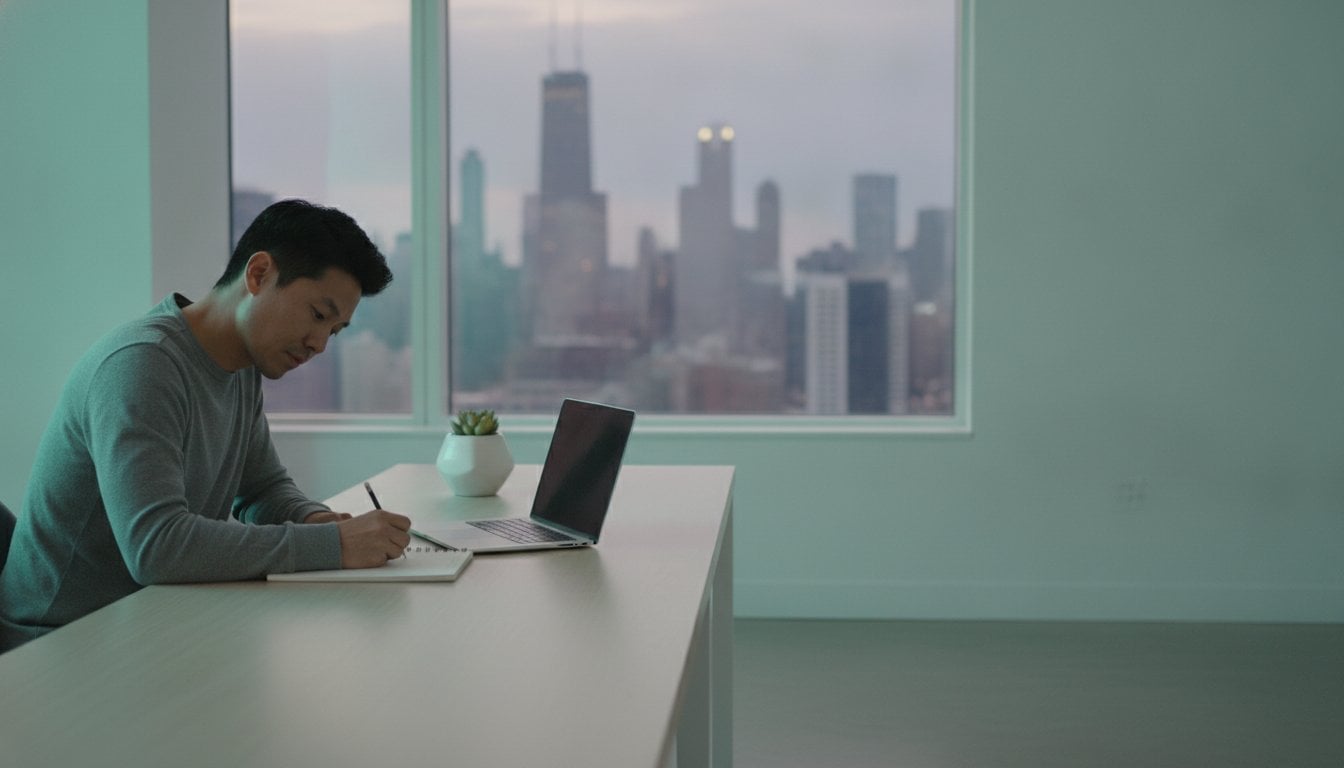

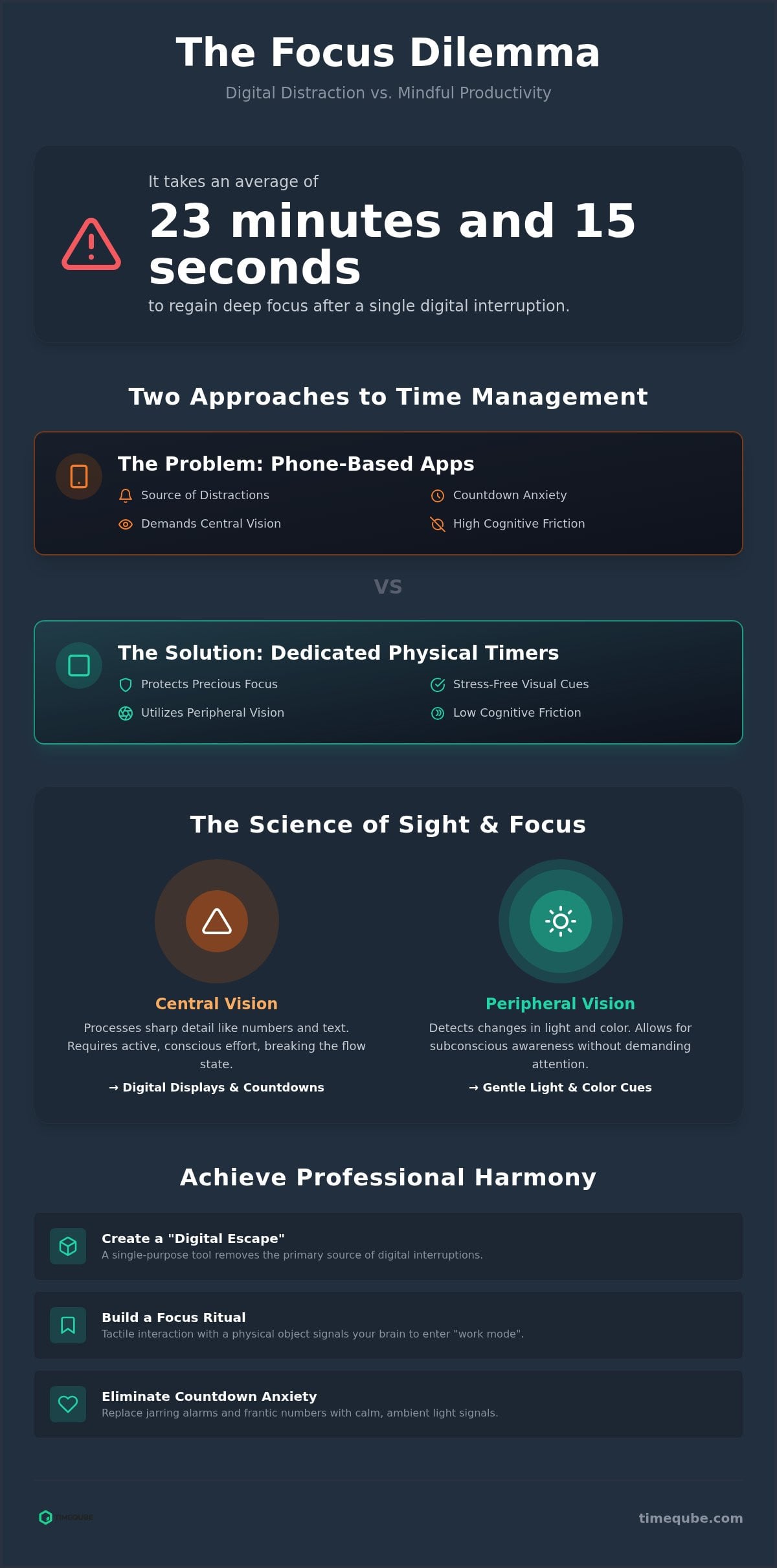
It takes an average of 23 minutes and 15 seconds to regain deep focus after a single digital interruption. When your productivity tool lives on your smartphone, it isn’t a solution; it’s a source of cognitive friction. You likely recognize the irony of using a device designed for distraction to manage your concentration. The constant threat of notification fatigue and the anxiety of aggressive digital countdowns often do more harm to your mental well-being than the work itself.
Choosing a physical pomodoro timer for work allows you to outsource time management to your peripheral vision. By moving away from screens, you respect the biological limitations of your brain and create a dedicated space for intentionality. This shift reduces the stress of high-pressure blocks and makes transitions between deep work and restorative breaks feel natural rather than forced. You deserve a workspace that protects your mental clarity instead of demanding it.
In this 2026 comparison guide, we examine the most sophisticated tactile tools available today. You’ll discover why visual and haptic stimuli outperform digital interfaces and how to select a timer that integrates seamlessly into a minimalist, high-performance environment. We explore options ranging from light-based indicators to kinetic designs, ensuring you find the perfect partner for your professional harmony.
Key Takeaways
- Understand why moving focus management to a dedicated hardware device eliminates the cognitive friction caused by smartphone notifications.
- Learn the psychological benefits of using peripheral vision to track time, allowing for a subconscious awareness that doesn’t break your flow state.
- Compare different hardware formats to avoid common distractions like audible ticking or fixed, inflexible intervals that disrupt deep work.
- Identify the ideal physical pomodoro timer for work by matching specific tool features to the unique requirements of your professional environment.
- Discover how color-coded light transitions provide a stress-free signal for breaks, removing the need for jarring alarms or aggressive digital displays.
Beyond the App: Why Professionals Prefer a Physical Pomodoro Timer for Work
A physical pomodoro timer for work is a dedicated hardware tool designed to facilitate the Pomodoro Technique. Unlike software alternatives, these devices exist outside the digital ecosystem to serve a singular purpose: protecting your focus. Moving your time management to a physical object creates a “Digital Escape.” This separation ensures that your primary tool for productivity isn’t also your primary source of interruption. By establishing a dedicated space for time, you remove the friction of digital multitasking.
The Problem with Phone-Based Productivity Apps
Relying on a smartphone for time tracking introduces significant cognitive friction. Every time you check a timer app, you risk falling into “incidental” notification scrolling. You might intend to see how much time remains in a work block, but a red notification badge or a previewed email draws you away. This creates a fragmentation of attention that is difficult to repair. Managing multiple digital windows on a single screen also increases cognitive load. The brain must exert effort to ignore the background noise of open tabs and alerts. A dedicated hardware tool remains in your peripheral vision, providing a constant reference point that doesn’t compete for your central attention.
Tactile Satisfaction and Ritualistic Focus
Physical rituals are essential for establishing a deep work environment. The simple act of interacting with a tangible object signals the brain to enter “work mode.” This creates a psychological boundary that separates your focus period from the distractions of the surrounding room. We define the tactile trigger as a physical anchor for professional concentration that grounds your awareness in the present moment. This sensory engagement helps solidify the transition from a wandering mind to a state of high-level professional output.
Many professionals also suffer from “Countdown Anxiety” caused by traditional ticking clocks or flashing digital digits. These aggressive visual and auditory cues demand central vision, often triggering a subtle stress response that hinders creativity. A mindful hardware solution, like the Timeqube, replaces these stressors with tranquil visual cues. By moving away from the frantic pace of counting seconds, you can maintain a calm, steady rhythm. This approach respects the biological limitations of the human brain and fosters a sense of professional harmony throughout the day.
The Science of Focus: Comparing Digital Displays vs. Visual Cues
The human brain processes sensory information through two distinct channels: central and peripheral vision. Central vision is specialized for detail, such as reading numerical digits on a screen. Peripheral vision is optimized for detecting changes in the environment, such as shifts in light or color. When you use a physical pomodoro timer for work that relies on digital displays, you force your brain into a state of constant active processing. This creates a subtle but persistent cognitive cost that can erode your mental stamina over time.
Numerical countdowns demand your central attention. Every time you glance at a digital timer, your brain must decode the numbers and calculate the remaining duration. This interruption, however brief, threatens the delicate state of “Flow.” Flow represents a peak psychological state where action and awareness merge. Digital interruptions break this harmony by requiring a shift in focus. Conversely, visual cues allow for a subconscious awareness of time. You don’t need to look away from your task to know where you stand in a work block.
Peripheral Vision and Time Perception
Our brains are biologically wired to notice color changes in our periphery without the need for conscious effort. This is the foundation of passive timekeeping. By using light rather than digits, you stay informed about your progress while keeping your central focus entirely on your work. This sensory approach is detailed further in The Science of the Professional Meeting Timer, which explores why visual signals outperform digital clocks in professional settings. It’s a method that respects your mental space by removing the friction of active monitoring.
Why Digits Can Trigger Workplace Stress
Numerical countdowns often mimic the pressure of a looming deadline. This “ticking clock” effect can trigger a cortisol response, leading to increased anxiety during high-pressure tasks. For individuals who experience time-blindness, such as those with ADHD, static numbers can feel overwhelming or abstract. Visual gradients provide a more intuitive sense of passing time. They offer a gentle transition that feels supportive rather than demanding. Numerical timers demand active processing, while visual cues allow for passive recognition. This difference is critical for maintaining professional harmony in demanding environments.
Transitioning to a stress-free environment begins with the tools you place on your desk. If you want to experience a more mindful approach to time management, consider how Timeqube for Mind/Body Therapies uses visual harmony to protect the user’s mental well-being. Professionals seeking a Time Timer alternative that eliminates the stress of a disappearing disk will find that peripheral light-based solutions offer a fundamentally calmer approach to temporal awareness.
Evaluating the Top Physical Timer Formats for Your Desk
Choosing the right physical pomodoro timer for work involves more than aesthetic preference. The hardware format you select dictates how you interact with time. Rotating cube timers offer a tactile, gravity-based experience. You simply flip the device to a pre-set face to begin. While this simplicity is attractive, these tools often lack interval flexibility. They don’t show progress visibility, leaving the user uncertain about the remaining duration. This can lead to frequent, focus-breaking checks.
Mechanical dials provide a nostalgic, “kitchen timer” aesthetic. They are durable and intuitive. However, the audible ticking sound is a significant drawback in professional environments. This constant rhythmic pulse acts as a persistent auditory stressor. Digital desktop clocks offer the most versatility in terms of features. They provide clear data but contribute to “screen fatigue.” Adding another digital display to a desk often feels like an extension of the computer rather than a tool for mental clarity.
Light-based visual timers represent the minimalist peak of focus tools. These devices use color-coded light to communicate time subconsciously. This approach is ideal for professional and therapeutic settings where silence and subtlety are prioritized. By removing digits and sounds, these timers reduce the friction of time management. They allow you to remain present in your task without the anxiety of a numerical countdown.
Mechanical vs. Electronic: Durability and User Experience
Longevity is a hallmark of high-end hardware. While disposable plastic gadgets are common, professional-grade tools offer superior tactile feedback and build quality. Battery life is a critical consideration for modern desktop setups. Many electronic timers now feature long-lasting rechargeable cells, reducing the need for constant maintenance. Silent operation remains a non-negotiable requirement. In open offices or therapy rooms, any mechanical noise can disrupt the professional harmony of the space.
Interval Flexibility: Pomodoro vs. Custom Blocks
The standard 25-minute Pomodoro interval is a useful baseline, but it doesn’t fit every professional task. Complex coding or strategic planning often requires longer deep work blocks. Conversely, counseling or brief consultations may necessitate shorter, specialized sessions. Customization is essential for diverse workflows. A tool that allows for varied intervals, such as the Timeqube for Business Meetings, ensures that your time management adapts to your needs rather than forcing you into a rigid, arbitrary schedule.
Selection Criteria: Matching Your Timer to Your Professional Environment
Selecting a physical pomodoro timer for work requires an assessment of your environmental constraints. A tool that functions well in a private study may fail in a high-stakes boardroom. In corporate settings, silence and minimalism are paramount. You need a device that provides data without becoming a distraction for colleagues or clients. Professional aesthetics ensure the tool integrates into the workspace rather than appearing as a novelty gadget. High-quality materials and understated designs foster an aura of professional harmony.
For those working from home, the challenge is maintaining a boundary between professional and personal life. A timer with a “non-work” feel, perhaps using soft light or elegant geometric shapes, helps preserve the home’s tranquility. It functions as a focus anchor during work hours without making your living space feel like a traditional cubicle. This balance is essential for reducing the mental friction of working where you live.
Visual timers are also essential for managing neurodiverse focus. Many individuals with ADHD experience time-blindness, where the passage of hours feels abstract or unpredictable. A physical tool that visualizes time through color or shape provides the necessary external structure to manage tasks effectively. You can explore more about Time Management for Neurodiversity to understand why visual cues are superior to digital calendars for maintaining presence.
Timers for Therapy and Sensitive Sessions
Aggressive alarms can disrupt a client’s breakthrough or a patient’s meditative state. In sensitive sessions, the transition between work and rest must be gentle. Non-invasive signals allow the practitioner to maintain the professional space while remaining aware of time. Gentle color transitions offer a supportive way to conclude sessions without the jarring interruption of a bell or a buzzing phone. This approach respects the psychological safety of the environment.
Branding and Corporate Professionalism
A kitchen timer often looks out of place in a modern executive environment. High-end hardware projects an image of intentionality and precision. For organizations, implementing team-wide productivity initiatives is more effective when the tools reflect the brand’s identity. Using Custom Logo Meeting Timers allows businesses to align their focus tools with their corporate culture. It turns a simple utility into a sophisticated statement of professional values.
To integrate these professional standards into your own workflow, explore the options available for Timequbes with Your Logo.
Timeqube: The Stress-Free Alternative to the Traditional Pomodoro Clock
Timeqube is the hardware-first answer to the inherent distractions of modern productivity tools. It serves as a physical pomodoro timer for work that prioritizes your mental well-being over aggressive tracking. The device utilizes a sophisticated color-coded transition, Green, Orange, and Red, to communicate the passage of time. This system eliminates the need for jarring alarm sounds or the stress of numerical countdowns. By relying on light, Timeqube interacts with your peripheral vision. This allows you to maintain a subconscious awareness of your schedule while your central focus remains entirely on your professional output.
The minimalist design of the cube reflects a commitment to professional harmony. It’s an unobtrusive ally that respects the biological limitations of the human brain. We provide a “Zero-Distraction” guarantee. Since the device is entirely hardware-based, there are no apps to update and no notifications to manage. This removal of friction ensures that your focus remains pure and uninterrupted throughout your work blocks. You simply set your duration and enter your flow state.
Designed for Professional Harmony
Clinicians who implement Timeqube for Mind/Body Therapies report that visual cues facilitate a deeper connection with their clients. Traditional alarms often disrupt sensitive breakthroughs or meditative states. A gentle shift from green to orange provides a supportive signal to begin concluding a session. In Business Meetings, the presence of a visual timer keeps teams on track without the social friction of a human timekeeper. The cube’s aesthetic is both functional and elegant. It acts as a conversation starter that signals a high degree of intentionality in how you manage your professional space.
Customization for Modern Teams
Standardizing focus culture is a priority for high-performance organizations. Through Customized Timequbes, companies can integrate their branding into their productivity tools. This helps align team-wide work rhythms and establishes a shared language for time management. When every desk features a consistent visual tool, the collective stress of the office environment decreases. It fosters a culture where deep work is respected and protected.
Focus is your most valuable professional asset. It’s a finite resource that is easily depleted by the noise of the digital world. Choosing the right physical pomodoro timer for work is an act of professional self-care. By opting for a hardware-only, visual solution, you remove the barriers to flow and reclaim your mental clarity. Protect your attention with tools that value your presence.
Reclaiming Professional Presence through Tactile Time
Transitioning to a physical pomodoro timer for work is an intentional step toward protecting your cognitive resources. By removing the friction of digital alerts and the stress of numerical countdowns, you allow your brain to settle into a natural state of flow. We’ve explored how peripheral vision and subconscious cues transform time from a source of anxiety into a supportive background rhythm. This method is already used by professional therapists worldwide to maintain presence during sensitive sessions.
It’s time to move beyond the aggressive ticking of traditional clocks and the notification fatigue of smartphone apps. You can discover the stress-free way to manage time with Timeqube and experience a zero-distraction workspace. Our visual cues provide the clarity you need in high-pressure meetings without the burden of “countdown anxiety.”
Focus is a skill that flourishes in the right environment. By choosing a tool that respects your biological limitations, you establish a foundation for long-term professional harmony. Your mental space is your most valuable asset. It’s time to treat it with the quiet confidence it deserves.
Frequently Asked Questions
Is a physical pomodoro timer better than a phone app?
Yes, physical timers are superior because they eliminate the “Digital Escape” problem. Smartphone apps often lead to notification fatigue and incidental scrolling. A physical pomodoro timer for work acts as a dedicated hardware anchor. It signals the brain to enter a deep focus state without the risk of digital interruptions. This separation respects your cognitive resources, providing a clear boundary between your productivity tools and your communication devices.
Can I use a visual timer for ADHD focus at work?
Yes, visual timers are essential tools for managing ADHD in the workplace. Many neurodiverse individuals experience time blindness, where hours feel abstract. A visual timer translates duration into a color-coded gradient that the brain can process subconsciously. This removes the stress of reading digital digits. It provides a constant, non-invasive reference point in your peripheral vision, helping you stay grounded in your current task without feeling overwhelmed.
Are there silent physical pomodoro timers for open offices?
Yes, light-based timers are the ideal silent solution for open offices. Traditional mechanical timers often produce an audible ticking sound that can disrupt your flow and annoy colleagues. Modern hardware solutions replace these auditory stressors with gentle color transitions. This allows you to track your work blocks in complete silence. You maintain professional harmony in shared spaces while ensuring you never miss a transition between deep work and restorative breaks.
How does a color-coded timer reduce meeting stress?
Color-coded timers reduce stress by moving time management from central to peripheral vision. Reading digital digits requires active processing, which often triggers “countdown anxiety” during high-pressure sessions. A shift from green to orange provides a subconscious signal that time is passing. This allows participants to remain fully present in the discussion. It eliminates the need for jarring alarms, fostering a calmer and more productive atmosphere for professional business meetings.
Do physical timers support intervals other than 25 minutes?
Yes, professional-grade physical timers offer flexibility beyond the 25-minute standard. While the Pomodoro Technique is a useful starting point, many tasks require longer deep work blocks or shorter consultation periods. Quality hardware allows you to customize these intervals to suit your specific professional needs. This versatility ensures that your time management tool supports your natural rhythm rather than forcing you into a rigid, arbitrary schedule that might hinder your creativity.
What is the best timer for a professional therapy session?
A light-based visual tool is the most effective choice for a professional therapy session. Jarring alarms or audible ticking can easily disrupt a client’s breakthrough or a meditative state. A silent timer that uses gentle color transitions provides a non-invasive way to manage session length. It allows the clinician to maintain a deep empathetic connection while staying aware of the time. This approach prioritizes the psychological safety and tranquility of the session.
How do I choose between a mechanical and a light-based timer?
Base your choice on your need for silence and sensory input. Mechanical timers provide a tactile, nostalgic experience but often feature a distracting ticking sound. Light-based timers are designed for professional environments where silence is essential. If you want to avoid “screen fatigue” and digital stress, a light-based tool is superior. It communicates time through peripheral cues, allowing you to stay focused on your work without the anxiety of watching numerical digits count down. For a detailed comparison of how these solutions stack up against traditional visual countdown tools, explore the best Time Timer alternative options for professionals in 2026.
Can I customize a physical timer with my company logo?
Yes, you can customize hardware solutions with your corporate logo to align with your brand identity. Branded tools like Timequbes with Your Logo help standardize productivity across large teams. This creates a shared culture of focus and intentionality. It’s a sophisticated way to provide your employees with a high-quality physical pomodoro timer for work while reinforcing your organization’s commitment to mental well-being and professional harmony in the workplace.