
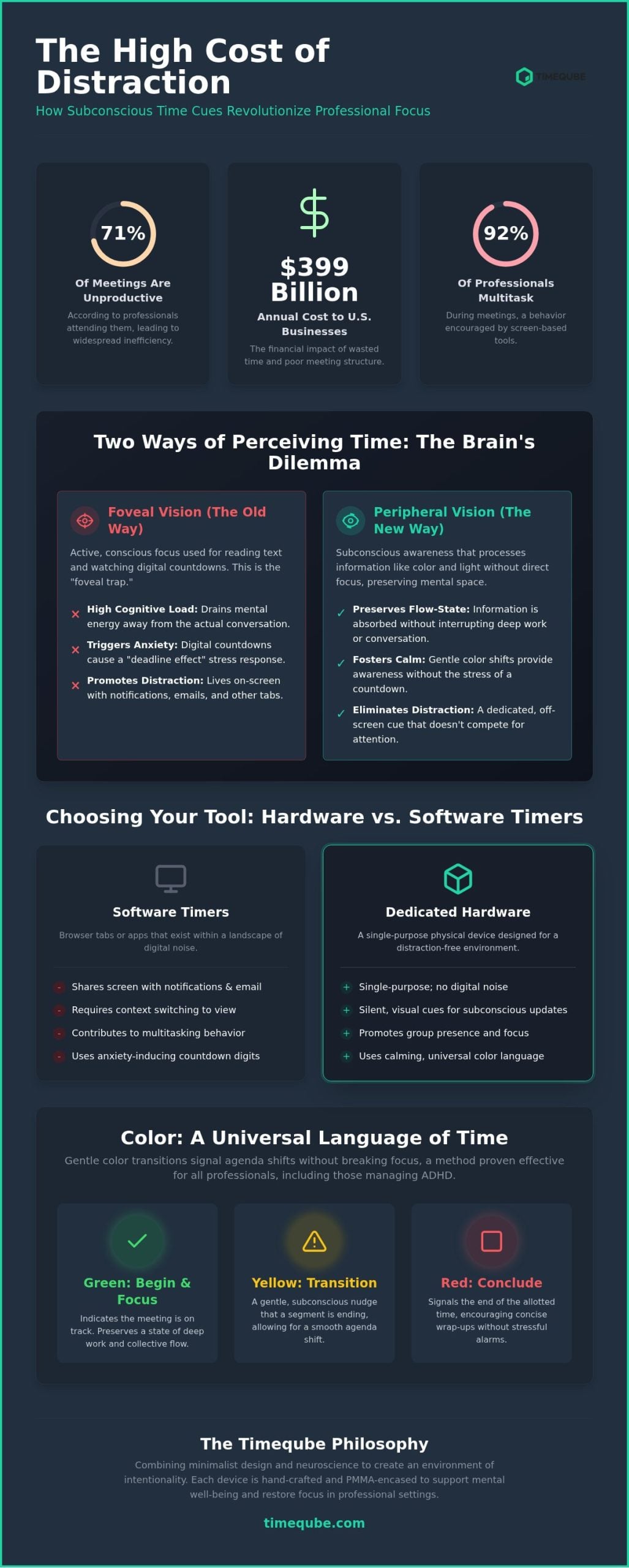
Did you know that 71% of meetings are considered unproductive by those attending them? This inefficiency costs U.S. businesses an estimated $399 billion annually. Most professionals feel the weight of this wasted time. You likely recognize the anxiety that builds when a digital countdown clock ticks away on a screen or the frustration when a notification breaks your team’s flow. Finding the right professional meeting timer isn’t just about tracking minutes. It’s about preserving mental space.
Traditional clocks demand direct attention. This interrupts deep work and breaks the connection in therapy sessions. Time management should be felt, not watched. This article explains how leveraging parafoveal vision and color-coded hardware can eliminate distractions and restore collective focus. You’ll discover the science behind subconscious awareness and how a hand-crafted, PMMA-encased device creates a stress-free environment. We’ll examine why moving from foveal to peripheral perception allows your team to maintain a flow-state without the friction of digital alerts. By understanding how the human brain processes sensory stimuli, you can transform your office or clinic into a sanctuary of intentionality.
Key Takeaways
- Learn how parafoveal vision allows for subconscious time awareness, removing the anxiety associated with traditional countdown clocks.
- Understand why a dedicated professional meeting timer provides a more reliable and less distractive experience than browser-based software.
- Discover how to implement color-coded stages to signal agenda shifts silently, preserving the flow-state of your team or patients.
- Explore the craftsmanship behind hand-glued PMMA hardware and how minimalist design supports mental well-being in professional settings.
Beyond the Ticking Clock: Why Digital Meeting Timers Fail Professionals
The digital clock is a paradox in the modern workspace. While it aims to provide structure, it often creates a cognitive bottleneck. Monitoring a screen-based countdown requires active focus. This draws mental energy away from the conversation at hand. When you use a digital professional meeting timer, you’re often forced to choose between the clock and the person speaking. This is the "foveal trap," where central vision is consumed by a ticking digit rather than a human expression. It’s a subtle but constant drain on your team’s collective focus.
The Cognitive Cost of Screen-Based Timing
Screen-based tools are inherently distractive. They exist within a landscape of notifications, emails, and browser tabs. Forcing a professional to switch tabs to check the remaining time introduces unnecessary friction. This micro-distraction breaks the flow-state required for complex problem-solving. Research from Speakwise indicates that 92% of professionals admit to multitasking during meetings. A timer that lives on a screen only encourages this behavior. It competes for the same neural pathways used for active listening and critical thinking, making it difficult to maintain presence. However, specialized technical software—such as digital transaction simulation systems—is designed for high-precision environments where focus is built into the workflow; you can learn more about how these professional tools are developed to meet specific industry needs.
Anxiety vs. Awareness: The Psychology of the Countdown
The human brain reacts to countdowns with a biological stress response. Seeing seconds disappear triggers a "deadline effect." This increases heart rates and induces anxiety, which is detrimental in therapy or high-stakes negotiations. Audible ticking sounds are even more intrusive. They break the silence necessary for reflection. Our subjective time perception is easily influenced by these external stressors. A truly 100% non-distractive solution must move beyond these aggressive cues to foster a sense of calm.
True professionalism requires a shift from high-energy pressure to quiet awareness. A dedicated professional meeting timer should act as an unobtrusive ally. It should exist in the periphery. By removing the ticking sounds and the frantic countdown of digits, we allow the brain to focus on the substance of the discussion. The goal is a state of professional harmony where time is felt rather than monitored. This approach respects the biological limitations of the human brain while ensuring that every minute remains productive and focused on human connection. For teams looking to go further, exploring dedicated reduce meeting stress tools can provide a comprehensive framework for transforming high-pressure sessions into calm, productive dialogues.
The Neuroscience of Time: Foveal vs. Peripheral Vision
The human eye doesn’t process all visual information equally. Foveal vision, the central region of highest acuity, allows us to read text and analyze complex data. This is where most digital clocks live. However, focusing on a screen-based clock consumes significant mental energy. Leonardo da Vinci (1452-1519) was among the first to recognize these distinct optical qualities in his studies of light and shadow. He understood that the eye perceives the world through layers of clarity and blur. Modern neuroscience confirms this. By using a professional meeting timer that sits in the periphery, you engage the subconscious without draining the conscious mind.
While peripheral awareness is ideal for time management, foveal vision is essential for detailed research, leading many scientists to explore Cube II Benchtop SEM for high-resolution imaging.
Stimulating the Subconscious with Parafoveal Cues
Parafoveal vision is the region of the retina where rods and cones are mixed. Research published by the IEEE in 2017 suggests that peripheral vision stimulation can convey information without requiring direct fixation. Simple light signals bypass the need for conscious processing. When a device changes color, your brain registers the shift before you even think about it. This allows teams to maintain a flow-state during a 25-minute meeting or an intense brainstorming session. The information is absorbed through a non-distractive channel, leaving the foveal region free for active participation.
Color as a Universal Language of Time
Color acts as a biological signal. A 2007 study in the Journal of Physiological Anthropology explored how color stimuli affect brain activities, specifically EEG alpha bands. The results showed that different wavelengths can modulate levels of alertness and relaxation. The transition from green to yellow, and finally to red, follows a natural hierarchy of urgency. This biological cueing is particularly effective for individuals managing ADHD. Gentle peripheral cues provide a steady anchor for focus without the jarring interruption of an alarm. For those navigating time management for neurodiversity, these sensory-friendly visual cues offer a way to sense the passage of time subconsciously rather than being overwhelmed by it.
By embracing these neurological facts, professionals can move away from the stress of the ticking clock. A visual professional meeting timer transforms time management into an ambient experience. It creates a shared social contract where every participant is aware of the remaining time without a single word being spoken. It’s the essence of professional harmony.
Hardware vs. Software: Choosing a Truly Professional Meeting Timer
Physicality creates presence. A shared visual signal acts as a silent social contract. It defines the boundaries of a discussion without the need for verbal interruptions or constant clock-watching. When you choose a professional meeting timer, you’re choosing how your team interacts with the dimension of time. Browser-based tools are ephemeral. They often hide behind active tabs or get buried under a mountain of digital notifications. A physical device remains a constant, tangible presence in the room. It anchors the focus of every participant. It signals that the current session is dedicated, respected, and protected from the outside world. This principle of using physical, single-purpose tools to anchor focus is also transforming athletics; for example, PickleTimes provides wrist-worn scorekeeping hardware that eliminates the need for distracting smartphone apps during play.
The Case for Screen-Free Professionalism
Removing digital distractions is essential for maintaining a 100% non-distractive environment. Software timers are inherently flawed because they compete with the very tasks they are meant to regulate. They live on the same screens where emails and Slack messages arrive. A physical cube provides a tactile anchor that exists outside the digital ecosystem. It doesn’t require a shared screen that might accidentally display private notifications or clutter the visual field with unnecessary UI elements. This screen-free approach ensures that the focus remains entirely on the participants. The device becomes an unobtrusive ally, offering a sophisticated solution to modern digital fatigue. It allows for a tranquil atmosphere where deep work, high-level strategy, or sensitive therapy can flourish without the friction of a glowing monitor. Agile teams in particular benefit from this approach, as a dedicated agile meeting visual timer keeps sprint ceremonies precise without the disruption of screen-sharing or intrusive digital countdowns.
Comparing Build Quality: Mass-Produced vs. Hand-Crafted
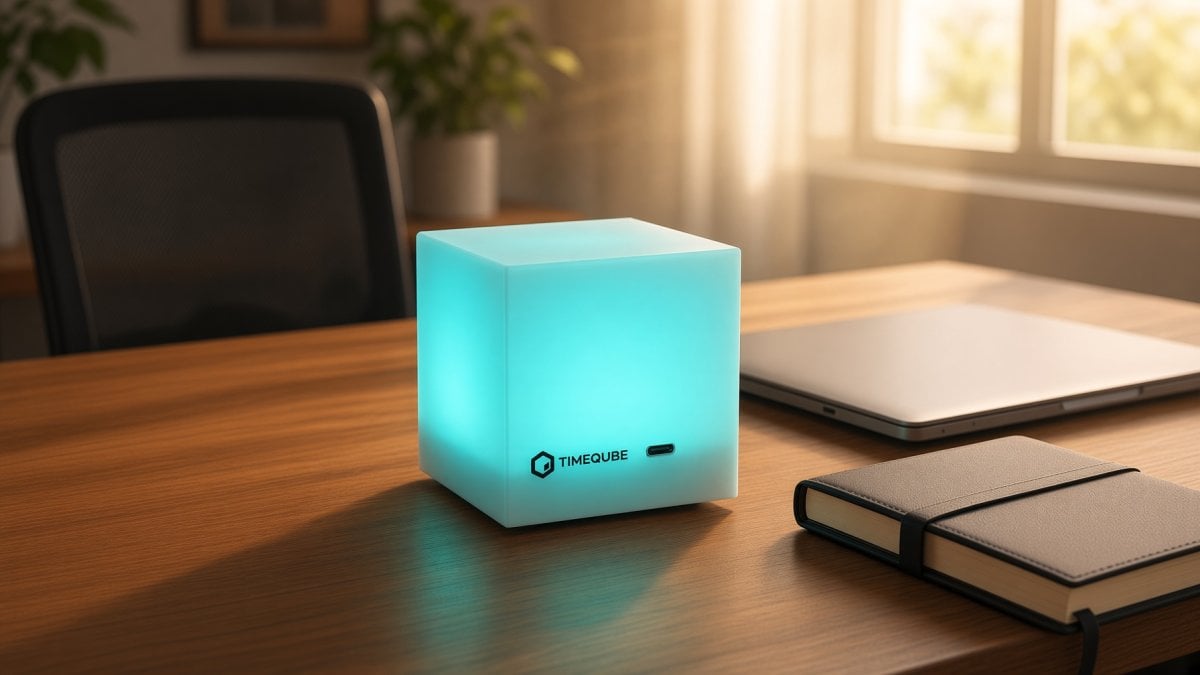
Build quality is a direct reflection of professional standards. Mass-produced plastic timers often feel disposable and lack the aesthetic weight required for a high-end office or clinic. In contrast, premium hardware, like the Timeqube, is meticulously hand-crafted in limited batches. Every unit features an outer casing made of high-quality PMMA (polymethyl methacrylate). This material is laser-cut and hand-glued to ensure a seamless, minimalist finish. The internal components are designed for longevity rather than planned obsolescence. The PCB 1.0 version, designed by Jakub of JLDesigns, serves as the reliable heart of the device. This attention to detail transforms the timer from a simple utility into a piece of functional art. It sits on a desk or boardroom table with quiet confidence. Skilled professionals in dedicated manufacturing facilities ensure each piece meets rigorous standards. This meticulous craftsmanship provides a level of durability and intentionality that generic, mass-market alternatives simply cannot match. For those looking to integrate this level of precision into their workspace, Explore Timeqube for Business Meetings to see how dedicated hardware can redefine your team’s collective focus.
Implementing Visual Time Management in Professional Settings
Successful implementation of visual timing depends on intentional placement. For a professional meeting timer to function effectively, it must reside within the parafoveal field of all participants. This means placing the device slightly to the side of the primary line of sight. In a boardroom, this might be the corner of a table. In a clinic, it sits on a side console. This positioning ensures the light remains an ambient signal rather than a central distraction. When you introduce the device to a team or client, frame it as a tool for mental well-being. Explain that the colors are there to protect their focus, not to create pressure. This philosophy of dedicated, non-intrusive visual cues also applies to broader facility management; for instance, you can discover Zoney to implement professional digital signage that keeps teams informed without the distractions of personal devices.
Visual Timing for Therapists and Coaches
Maintaining a strong therapeutic bond requires undivided attention. Constant clock-watching by a practitioner can signal a lack of presence or a rush to finish. Visual timing solves this by allowing the therapist to keep their eyes on the client. Gentle light transitions provide a subconscious cue that the session is nearing its natural conclusion. This allows for a graceful wrap-up of complex emotional discussions. The hardware is designed with a non-glossy finish on the switch. This ensures that starting or resetting the timer is a quiet, tactile action that doesn’t disrupt the room’s atmosphere. Professionals can learn more about these specific applications by exploring Timeqube for Mind/Body Therapies.
Executive Boardroom Protocols
Meeting bloat is a significant drain on corporate resources. Since 2020, the time professionals spend in meetings has increased by 252%. Establishing a "Timeqube contract" at the start of high-stakes sessions helps mitigate this. The team agrees that green represents active discussion, yellow signals the wrap-up phase, and red indicates the hard stop. This shared understanding reduces the need for a moderator to interrupt the flow. It empowers every participant to manage their contributions based on subconscious color awareness. For organizations prioritizing brand identity, a custom logo meeting timer adds a layer of professional intentionality to the environment by aligning branded hardware with a culture that values both time and the mental space of its employees. Teams seeking a broader toolkit for calmer, more focused sessions can also explore the most effective tools to reduce meeting stress and restore team focus available in 2026.
To begin transforming your office culture, you can order a professional meeting timer with your company logo to align your brand with a culture of focused productivity.
The Timeqube Philosophy: Hand-Crafted Precision for Focused Teams
Every professional meeting timer produced by our team is a result of a deliberate intersection between psychology and design. We view time management as a sensory experience that requires a physical anchor. This philosophy is embedded in our manufacturing process. We don’t believe in mass-produced, disposable tools. Instead, we focus on creating functional art that respects the user’s mental space. The journey of each device begins with a vision of professional harmony and ends with a hand-crafted unit that is truly unique.
Professional identity is built on intentionality. When a team uses a dedicated device, they signal a commitment to high-level focus. For organizations looking to align their physical environment with their brand values, custom logo meeting timers offer a way to integrate this philosophy into daily operations while reinforcing corporate identity through the science of color-coded time management. It’s more than a clock; it’s a statement of respect for the time and mental well-being of every participant. For organizations looking to align their physical environment with their brand values, Customized Timequbes for Your Brand offer a way to integrate this philosophy into daily operations. It’s more than a clock; it’s a statement of respect for the time and mental well-being of every participant.
Restore Focus with Intentional Timekeeping
The shift from digital distractions to visual awareness is more than a productivity hack. It’s a return to mindful presence. By leveraging peer-reviewed vision science, we move time management from the center of our focus to the periphery. This reduces the biological stress response triggered by ticking clocks and screen-based notifications. A dedicated professional meeting timer acts as a silent anchor. It fosters a shared social contract that respects the mental space of every participant.
Choosing a physical device over a browser tab is a statement of professional intentionality. Every unit is hand-crafted in Poland with a 100% non-distractive design. This ensures that your discussion remains fluid and uninterrupted. It’s a piece of functional art that prioritizes human connection over digital friction. You now have the tools to transition your workspace into a sanctuary of flow. Embrace a future where time serves your team rather than interrupting them.
Upgrade your boardroom with a hand-crafted Timeqube.
Frequently Asked Questions
Is a visual timer less distracting than a standard digital clock?
Yes, visual timers are 100% non-distractive because they don’t require central vision focus. Digital clocks demand foveal attention to read digits, which breaks cognitive flow. A visual signal sits in the periphery. This allows the brain to process time changes subconsciously while you remain fully engaged in the conversation at hand.
What is the science behind peripheral vision and time awareness?
Time awareness through light relies on parafoveal vision, where the retina’s rods and cones process ambient stimuli without direct fixation. This allows the brain to register color shifts as biological cues. Unlike digits that require conscious decoding, light signals bypass the prefrontal cortex’s heavy lifting. This maintains a steady state of awareness without causing cognitive fatigue.
How do color-coded light signals help manage professional meetings?
Color-coded signals establish a silent social contract between participants. Green indicates active discussion, yellow prompts a wrap-up, and red signals a hard stop. Using a professional meeting timer with these stages reduces meeting bloat. It provides an objective, non-verbal reference point that everyone in the room understands instinctively without interrupting the speaker.
Can I use a visual timer for ADHD focus and deep work?
Visual timers are highly effective for ADHD because they offer gentle, non-intrusive cues that prevent time blindness. The transition of light provides a grounding sensory stimulus that helps manage focus. It creates a tranquil environment for deep work by removing the anxiety associated with ticking sounds or the pressure of flashing digital alerts on a screen. Those seeking a broader framework for neurodivergent-friendly approaches can explore time management for neurodiversity to understand how sensory-friendly tools reduce transition anxiety and support deep focus.
Why is a physical hardware timer better than a free meeting app?
Hardware timers provide a shared physical presence that apps cannot replicate. Software timers often hide behind browser tabs or get buried under desktop notifications. A dedicated professional meeting timer serves as a tactile anchor for the room. It removes the temptation of multitasking and ensures that timekeeping remains a screen-free, collective experience for the entire team. Teams running agile ceremonies can explore the best agile meeting visual timers of 2026 to find hardware solutions that keep daily standups and sprint reviews precisely timeboxed.
How do I introduce a visual timer to my team without it being a distraction?
Introduce the device as a partner in mental well-being rather than a monitoring tool. Explain the shared contract where the light serves as a silent guide for the agenda. Place it in the periphery of the table so it isn’t the center of attention. When the team understands that the colors protect their flow-state, the device becomes an unobtrusive ally.