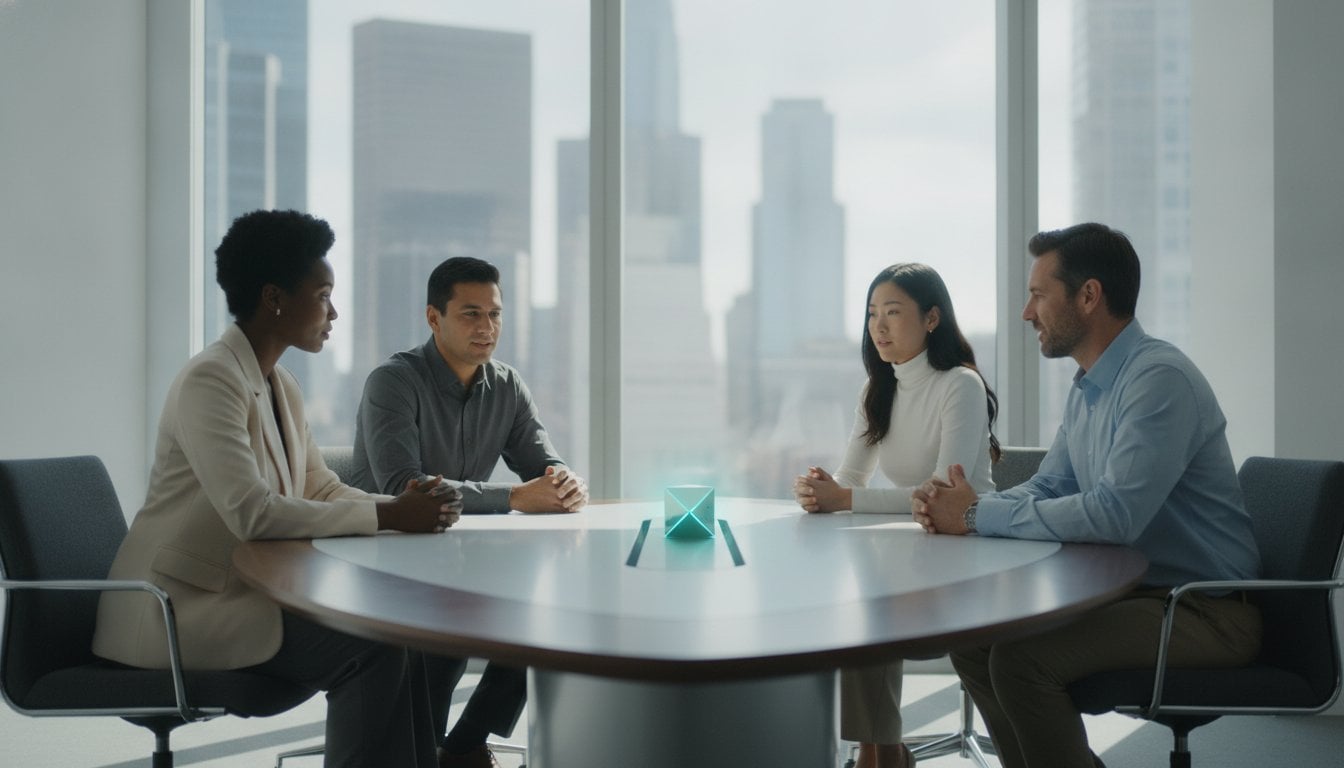

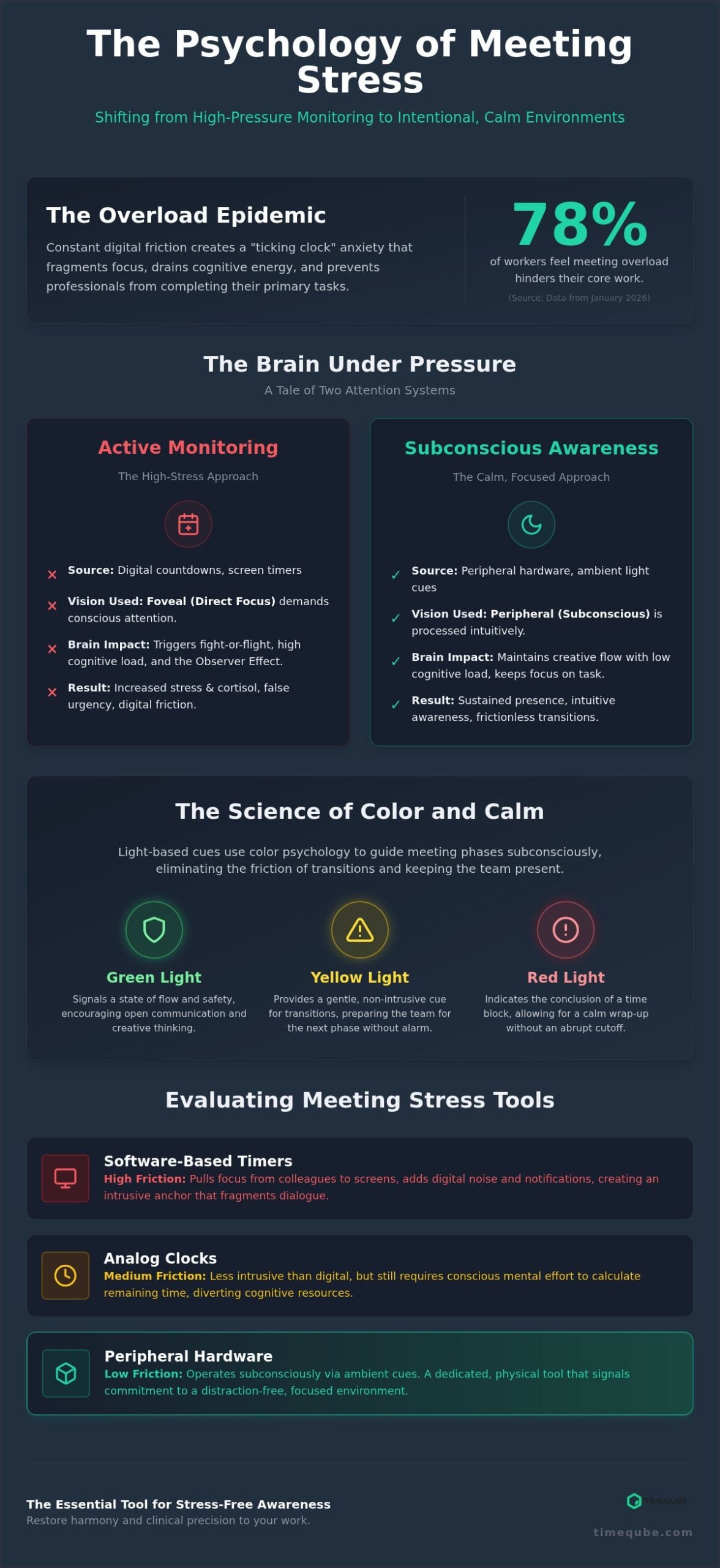
Current data from January 2026 reveals that 78% of workers believe meeting overload prevents them from completing their primary tasks. This constant digital friction creates a “ticking clock” anxiety that fragments focus and drains cognitive energy. You likely recognize the drain of staring at aggressive countdowns while managing a flood of screen notifications. It’s clear that the standard approach to scheduling is failing our biology. Implementing the right reduce meeting stress tools is no longer a luxury; it’s a necessity for maintaining professional harmony and mental clarity.
You can reclaim your team’s focus by shifting from high-pressure monitoring to intentional, calm environments. This guide demonstrates how to transform stressful sessions into productive dialogues using specific psychological insights and specialized hardware. We’ll explore ten effective tools that leverage peripheral vision and sensory stimuli to manage time subconsciously. You’ll discover how to facilitate natural transitions between meeting phases and significantly improve the well-being of every participant. By removing digital noise, you create space for genuine presence and clinical precision in your work.
Key Takeaways
- Understand how active clock-watching triggers time-pressure anxiety and disrupts creative flow through the Observer Effect.
- Identify the most effective reduce meeting stress tools by comparing intrusive digital notifications against passive peripheral cues.
- Learn to regulate the meeting environment using olfactory and haptic stimuli to manage collective cortisol levels and individual stress.
- Establish clear visual boundaries for meeting phases to eliminate the friction of transitions and maintain team presence.
- Discover the benefits of hardware-only solutions that use color-coded light to facilitate subconscious time awareness without digital distractions.
The Psychology of Meeting Stress: Why Traditional Timing Fails
Meeting stress is a physiological manifestation of time-pressure anxiety. It occurs when the brain’s focus shifts from the primary discussion to the ticking clock. This shift triggers the amygdala, the brain’s alarm system, inducing a mild fight-or-flight response. When you’re constantly monitored by a timer, your cognitive resources are diverted away from the task at hand. This is deeply rooted in the psychology of stress management, where perceived pressure directly impacts performance and well-being.
In collaborative settings, the Observer Effect becomes a significant barrier to productivity. When participants actively watch a clock, their creative flow breaks. They’re no longer thinking about solutions; they’re thinking about the remaining minutes. This fragmentation of attention prevents deep work and meaningful connection between team members. Effective reduce meeting stress tools must address this biological reality by removing the need for active monitoring. When organizations implement specific reduce meeting stress tools, they often overlook the cognitive load created by the interface itself.
The Problem with Digital Countdowns
Digital numbers demand active foveal vision. Your brain must consciously translate symbols into meaning, which adds to your total cognitive load. The flickering of changing digits creates a false sense of urgency. This visual noise suggests a crisis even when the meeting is going well. Many time-boxing software solutions actually increase cortisol levels because they force the brain to multitask. You end up managing the tool instead of the conversation. It’s a friction-heavy approach that prioritizes the schedule over the human experience.
Subconscious Time Awareness vs. Active Monitoring
The human brain is remarkably efficient at processing information in the peripheral field. Unlike digital interfaces that require direct focus, peripheral cues allow for a transition from conscious counting to intuitive awareness. This allows participants to stay present in the moment while remaining aware of the time. Peripheral time awareness is a low-stress alternative to digital tracking that utilizes non-intrusive sensory signals to guide the rhythm of a session. It functions beneath the level of conscious thought, ensuring that the brain’s executive functions remain dedicated to the task at hand. This method removes the cognitive friction associated with traditional timing methods.
Evaluating Tools to Reduce Meeting Stress: Digital vs. Peripheral
Effective reduce meeting stress tools fall into three primary categories: digital applications, analog devices, and peripheral hardware. Each category interacts with the human brain in distinct ways. Digital apps often demand high levels of active, foveal attention. Analog clocks require the brain to calculate time remaining through conscious effort. Peripheral, light-based tools operate on a subconscious level, allowing the mind to remain focused on the conversation. Understanding these differences is essential for creating a tranquil work environment.
The choice of tool defines the meeting’s atmosphere. Authoritative tools like digital countdowns can feel like a rigid enforcer, heightening anxiety. Collaborative tools, such as ambient light, act as a shared heartbeat for the group. High-stakes environments are increasingly returning to hardware-only solutions to eliminate the risk of digital pings. Research into The Psychology Behind Meeting Overload suggests that reducing these interruptions is vital for mental clarity. When the tool is physical and dedicated, it signals a commitment to the team’s mental space.
Software-Based Timers: The Hidden Cost of Distraction
Screen-sharing a timer creates an intrusive visual anchor that fragments focus. It pulls eyes away from the speaker and toward a flickering screen, breaking the natural rhythm of dialogue. Notifications and pop-ups from other applications further disrupt the session. When participants look at screens instead of their colleagues, the sense of “presence” vanishes. This digital friction makes genuine connection difficult to maintain. Software often prioritizes the schedule over the human experience, leading to a sense of being managed by an algorithm rather than participating in a discussion.
Physical Visual Cues: The Science of Color and Calm
Light-based cues offer a sophisticated alternative to traditional clocks. Green signals a state of flow and safety, encouraging open communication. Yellow provides a gentle transition, preparing the brain for a change in phase without the shock of an alarm. Red indicates a natural conclusion. These colors provide a gentle nudge rather than an aggressive interruption. You can explore the science of the professional meeting timer to understand how these cues respect human biology.
Hardware solutions ensure that the focus remains on the humans in the room. By choosing reduce meeting stress tools that prioritize the peripheral field, you protect your team’s cognitive energy. Consider integrating a dedicated meeting timer to restore professional harmony and ensure every session feels intentional and calm.
Sensory and Mindfulness Tools for the Conference Room
Shifting the focus from visual awareness to a multi-sensory environment is a logical step in creating professional harmony. While light-based signals manage the rhythm of time, other sensory stimuli regulate the room’s underlying emotional energy. High-stakes discussions often benefit from specific lighting temperatures that mimic natural cycles. Lower Kelvin ratings, typically between 2700K and 3000K, produce a warm, amber light that actively reduces the “stress-energy” of a room. It’s a subtle adjustment that helps lower collective cortisol levels. By integrating these sensory reduce meeting stress tools, you ensure the environment supports the biological needs of every participant rather than fighting against them.
Olfactory and Auditory Regulation
Luxury hospitality leaders like Quob Park Estate, Hotel & Spa have long understood this connection between environment and well-being, using curated sensory experiences to create spaces where visitors can achieve a similar state of physiological calm and mental clarity.
The olfactory system has a direct, unmediated path to the brain’s emotional center. Scents such as citrus promote cognitive alertness, while lavender encourages a physiological state of calm. Unlike individual tactics that only benefit one person, environmental scenting addresses the collective atmosphere of the conference room. Auditory regulation is equally vital for maintaining focus. Paradoxically, “silent” offices can be more stressful than ambient ones because every minor noise becomes a sharp distraction. Low-frequency soundscapes or gentle white noise mask these disruptions effectively. This approach aligns with clinical mindfulness-based stress reduction by removing environmental friction. It’s a method that allows the team to maintain presence without being jarred by sudden, unpredictable acoustic changes.
Tactile Tools for Cognitive Grounding
Tactile engagement provides a necessary physical anchor in an increasingly digital work world. Professional-grade grounding objects have become essential for maintaining focus during high-conflict or high-pressure discussions. These tools allow for subconscious motor activity, which can actually improve concentration on the primary verbal dialogue. When participants use a physical object to ground themselves, it centers their attention on the present moment. This prevents the mind from drifting toward screen-based notifications. Hardware-based reduce meeting stress tools offer a permanent sensory reference point that software simply cannot replicate. They provide a tangible sense of stability, helping to manage individual anxiety while reinforcing the team’s shared commitment to a focused, intentional meeting culture.
Most advice focuses on escaping meetings. This is often unrealistic in complex organizations where collaboration is essential. A more effective strategy involves redesigning the meeting infrastructure to support human biology. By setting clear visual boundaries for specific phases, such as the initial introduction, the creative ideation phase, and the final conclusion, you create a predictable mental map. This structure significantly reduces the cognitive load of wondering about the remaining time or the current agenda status. Utilizing physical reduce meeting stress tools allows teams to successfully implement “No-Device” policies. When participants don’t need to check their phones for the time, they remain fully present. This return to physical presence restores the human element to professional collaboration and ensures sessions stay on track.
Customizing the Meeting Environment
Branded tools offer a psychological benefit by fostering a sense of corporate unity and shared mission. When a team sees a tool that reflects their specific identity, it reinforces a shared purpose and a commitment to quality. You can discover how customized Timequbes with your logo can unify your meeting space while serving a vital functional role. This customization transforms a standard conference room into a “sacred space” dedicated to deep work, high-stakes negotiation, or therapeutic sessions. It signals to everyone entering the room that the environment is curated for focus. Investing in the physical aesthetics of timing tools demonstrates that the organization values the mental space of its employees.
Visual Signals as a Language of Respect
Light-based signals function as a silent, unobtrusive moderator. They remove the need for a human facilitator to interrupt a speaker, an act that often causes social friction and subconscious resentment. When the ambient light shifts from green to yellow, the speaker receives a gentle, non-verbal cue to begin their summary. This creates a “Graceful Exit” protocol where sessions end precisely on time without the “drill sergeant” vibe associated with aggressive digital alarms. Building a culture of punctuality becomes a collective responsibility rather than a top-down mandate. It respects the time of every participant and eliminates the cascading anxiety caused by meetings that run over schedule. Using these reduce meeting stress tools ensures that transitions between speakers and topics remain fluid and professional.
Why Timeqube is the Essential Tool for Stress-Free Awareness
Timeqube represents a fundamental shift in how we perceive time in professional settings. It adheres to a strict hardware-only philosophy. By removing digital interfaces, it eliminates the primary sources of meeting fatigue. There are no apps to download and no notifications to manage. You simply have a dedicated physical object that communicates through the universal language of light. This philosophy of specialized, reliable hardware is also vital in tactical settings where Quantum Infinity provides stealth tunneling solutions for secure enterprise environments. This approach makes it one of the most effective reduce meeting stress tools available. It respects the biological limitations of the human brain by providing information without demanding direct cognitive focus.
The minimalist aesthetic of the device serves a specific psychological purpose. It reduces visual clutter in the meeting space, allowing the team to focus on human interaction. In a world dominated by “invisible” software and abstract countdowns, a physical object provides a tangible sense of grounding. Timeqube facilitates a deep flow state by remaining in the user’s peripheral vision, providing time awareness without interrupting conscious thought. This ensures that the primary focus remains on the discussion. The device acts as a silent partner that maintains the rhythm of the session through subtle sensory stimuli.
From Therapy to the Boardroom
The origins of this technology in therapeutic settings highlight its efficacy. Therapists often choose Timeqube for Mind/Body Therapies because silence and presence are vital for sensitive client work. Any auditory alarm or flickering digital screen would destroy the clinical rapport. This same need for “therapeutic calm” translates perfectly into the high-pressure corporate world. In the boardroom, the Timeqube for Business Meetings serves as a centerpiece for focus. It brings a sense of professional harmony to environments that are often characterized by friction and noise. Executive teams seeking to eliminate digital distractions entirely will find that a dedicated visual timer for boardrooms provides the precise combination of temporal structure and calm that high-stakes sessions demand.
Color-coded light is the most human-centric way to track time. It leverages subconscious processing to provide a gentle, non-verbal narrative of the meeting’s progress. By choosing reduce meeting stress tools that align with human perception, you protect your team’s mental well-being. Whether you’re facilitating a creative workshop or a high-stakes executive session, there’s a specific configuration designed for your needs. Choosing the right Timeqube is an investment in your team’s long-term cognitive health and operational efficiency. It transforms time from a source of anxiety into a tool for intentionality.
Restoring Harmony to the Modern Meeting Space
The transition from a high-pressure meeting culture to one of intentional focus begins with environmental design. You now understand how shifting from active clock-watching to peripheral awareness preserves cognitive flow and reduces cortisol. By integrating sensory anchors and hardware-only solutions, you eliminate the digital friction that fragments team focus. These reduce meeting stress tools are essential for any organization prioritizing mental well-being alongside clinical precision. It’s time to move beyond survival and toward a state of professional harmony.
Timeqube provides a zero-distraction hardware design that leverages science-backed peripheral vision technology. This sophisticated approach is trusted by therapists and Fortune 500 companies alike to foster genuine presence. It removes the biological stress of digital countdowns while maintaining a steady rhythm for every session. Upgrade your meeting environment with a Timeqube visual timer to reclaim your team’s mental space. You can transform your conference room into a sanctuary for deep work and collaborative success. Your team deserves a workspace that respects their biological limitations and promotes quiet confidence.
Frequently Asked Questions
How do visual timers reduce meeting stress compared to regular clocks?
Visual timers replace the cognitive strain of reading numbers with intuitive color-coded light. Regular clocks require active foveal vision and mental calculation, which increases cognitive load. Light-based signals allow participants to sense time passing without breaking their creative flow. This shift from active monitoring to passive awareness is why they are considered superior reduce meeting stress tools. It creates a tranquil environment where the focus remains on the human interaction.
Can physical tools really improve meeting productivity?
Physical tools create a dedicated sensory anchor that software cannot match. By removing time management from the screen, you eliminate the distractions of notifications and multitasking. Research suggests that tangible hardware signals a commitment to deep work and professional harmony. This environmental cue helps teams enter a flow state more quickly. Productivity improves because the brain is no longer fragmented between the digital interface and the verbal discussion.
What is the best tool for managing ADHD-related time blindness in meetings?
A hardware-based visual timer is often the most effective solution for ADHD-related time blindness. It provides a constant, non-intrusive external reference for time. Unlike digital alarms that can be jarring, color-coded light offers a gentle transition between phases. This helps individuals stay grounded in the present moment without the anxiety of a ticking clock. It functions as a subconscious guide that supports focus throughout the entire session.
Why are digital countdowns considered stressful for the human brain?
Digital countdowns trigger a mild fight-or-flight response in the amygdala. The flickering of changing digits creates a false sense of urgency and crisis. This physiological reaction increases cortisol levels and narrows the scope of creative thinking. Your brain treats the countdown as a threat to be monitored rather than a helpful guide. Removing these aggressive monitors is a vital step in reclaiming a calm work environment.
How can I introduce new meeting tools to my team without causing more friction?
Introduce new reduce meeting stress tools as a shared benefit for mental well-being rather than a management mandate. Position the tool as a way to protect the team’s focus and reduce digital fatigue. Start with a pilot session in a low-stakes environment to demonstrate the benefits of peripheral awareness. When teams experience the reduction in social friction during transitions, adoption happens naturally. It’s about framing the change as an ally for their cognitive space.
Are there specific colors that work best for reducing meeting anxiety?
Green, yellow, and red are the standard for biological time-tracking. Green promotes a state of safety and open communication. Yellow provides a neutral transition, preparing the brain for a conclusion without the shock of an alarm. Red indicates a natural stopping point. These colors utilize universal psychological associations to guide behavior subconsciously. This sensory approach ensures that the meeting ends on a calm, respectful note.
Do visual timers work for remote or hybrid meetings?
Physical visual timers are highly effective in hybrid settings when placed in the camera’s field of view. They provide a shared visual heartbeat that unifies participants across different locations. For remote workers, a hardware device on the desk reduces the need to look at on-screen clocks. This creates a consistent environmental cue that helps maintain presence. It bridges the gap between digital communication and physical reality.
How does peripheral vision processing help with time management?
Peripheral vision allows the brain to process information without requiring direct focus. This is known as subconscious time awareness. When a light-based tool sits in your peripheral field, your brain tracks the color change without interrupting your executive functions. You remain fully engaged in the conversation while intuitively knowing how much time remains. It’s a high-efficiency method that respects the natural architecture of human perception.