
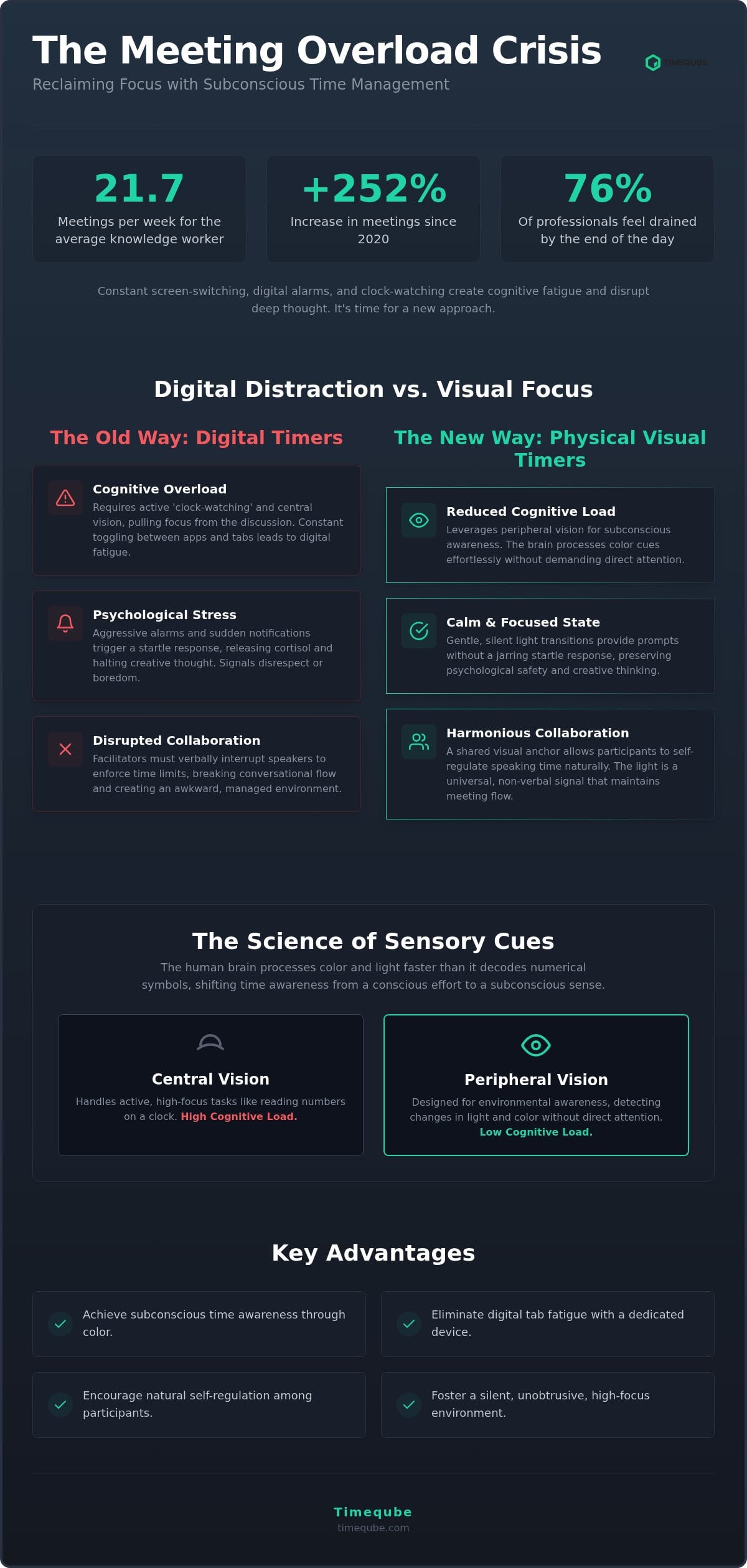
The average knowledge worker now attends 21.7 meetings per week, representing a 252% increase since 2020. This relentless schedule leaves 76% of professionals feeling drained by the end of the work day. You’ve likely felt the jarring shock of a digital alarm or the friction of toggling between a spreadsheet and a stopwatch app. Introducing a physical meeting timer into your workspace offers a sophisticated alternative to this digital noise. It transforms time from a source of anxiety into a silent, supportive presence. This shift allows your team to maintain focus on the conversation rather than the clock.
We all agree that the current culture of back-to-back calls is unsustainable for the human brain’s biological limitations. Constant screen-switching and aggressive notifications trigger a startle response that fractures deep thought. This article promises to show you how to eliminate meeting overflow and cognitive fatigue by leveraging the science of peripheral visual cues. We’ll explore the psychological benefits of light-based signaling and how a dedicated physical tool fosters a professional environment where time is respected but not feared. By the end, you’ll understand how to finish every meeting with all agenda items addressed in total harmony.
Key Takeaways
- Leverage the biological advantage of color-coded light to achieve subconscious time awareness during complex discussions.
- Eliminate digital tab fatigue and cognitive friction by introducing a dedicated physical meeting timer into your workspace.
- Implement a time-boxed agenda supported by central visual cues to encourage natural self-regulation among participants.
- Select minimalist, silent hardware that acts as an unobtrusive ally in high-focus environments such as therapy and boardrooms.
What is a Physical Meeting Timer and Why Does Your Team Need One?
A physical meeting timer is a dedicated hardware device that uses color-coded light to manage time subconsciously. It functions as a sensory-first productivity tool, moving beyond the limitations of numerical displays. Unlike traditional clocks, these devices focus on the volume of time remaining rather than the specific hour of the day. This distinction is vital for maintaining presence. In 2026, as executive offices move toward a digital detox model, physical hardware provides a necessary break from screen-based monitoring. It acts as a silent partner that respects the mental space of every participant.
Teams often struggle with the constant shifting of focus between an agenda and a timer app. A physical meeting timer acts as a shared visual anchor. It ensures every individual in the room or on the call remains synchronized without the need for verbal reminders. This creates a tranquil environment where the focus remains on the discussion, not the mechanics of the schedule. For organizations seeking to reinforce their brand identity, Timequbes with Your Logo integrate professional aesthetics with functional design.
The Problem with ‘Clock-Watching’ in Professional Settings
The act of checking a smartphone or a wrist watch during a high-stakes meeting often signals boredom or a lack of respect for the speaker. This behavior disrupts the psychological safety required for open collaboration. When teams rely on aggressive digital alarms, they experience a startle response that interrupts cognitive flow. Meeting Overflow is a primary drain on corporate ROI. By removing the need for active clock-watching, teams can engage more deeply with the subject matter. The transition from green to yellow light provides a gentle prompt that doesn’t break the speaker’s momentum.
Visual Anchors vs. Digital Distractions
Software-based timers compete for limited screen real estate and demand central-vision focus. This digital clutter contributes to cognitive fatigue and increases the likelihood of multitasking. A physical timer exists in the physical world, providing a constant but unobtrusive presence. It functions similarly to the Pomodoro Technique by creating clear boundaries for activity, yet it does so without the friction of a browser tab. Facilitators no longer need to interrupt speakers verbally to announce time limits. The light transitions provide a silent, universal signal that everyone understands. This allows for a more professional and harmonious meeting culture where time is a shared resource rather than a source of stress.
The Science of Subconscious Time Management
The human brain processes visual stimuli, specifically color and light, significantly faster than it decodes numerical symbols. This biological reality forms the foundation of subconscious time management. When participants look at a digital clock, they must engage their central vision to read, interpret, and calculate the remaining duration. This active processing interrupts the flow state of a productive discussion. Using a physical meeting timer shifts this burden to the subconscious. It allows the mind to register time as a sensory experience rather than a mathematical problem.
Subconscious awareness empowers individuals to self-regulate their speaking time. When the room turns a warm yellow, speakers naturally begin to summarize their points without a facilitator’s intervention. This leads to more equitable participation and fewer meeting overruns. If you want to experience this sensory-first approach, consider integrating a Timeqube for Business Meetings into your next strategy session.
Peripheral Vision and Cognitive Load
Central vision handles tasks like reading text. Peripheral vision is designed for environmental awareness. It informs the brain about changes without demanding direct attention. Placing a visual cue in the periphery reduces cognitive load. This allows team members to stay engaged while naturally absorbing the volume of time left. Integrating these tips to keep your meetings focused ensures the agenda moves forward seamlessly. For deeper insight, explore The Science of the Professional Meeting Timer.
Reducing Stress with Gentle Transitions
Traditional timers rely on audible alarms that trigger a startle response. This response releases cortisol and halts creative thinking. In contrast, gentle light transitions mimic the natural shift of daylight. This approach respects the brain’s preference for gradual change. It’s particularly beneficial for neurodiverse teams who might find digital noises overstimulating. A dedicated physical meeting timer fosters a tranquil atmosphere where time is a supportive guide.
Physical vs. Digital Timers: Making the Right Choice for Your Office
The modern workspace is often a crowded landscape of notifications and browser tabs. Digital timers, while accessible, frequently contribute to “tab fatigue,” which is the psychological stress caused by managing too many open windows. When a timer exists only as a piece of software, it’s easily buried beneath a spreadsheet or a video call window. This invisibility renders it ineffective at the very moment it’s needed most. A physical meeting timer provides a persistent, tactile presence that signals a dedicated commitment to time as a shared resource. It transforms time management from a hidden background process into a visible boardroom priority.
Unlike software tools that compete for your attention alongside emails and instant messages, physical hardware stands apart from the digital noise. It occupies a permanent spot in the physical environment, ensuring that every participant remains aware of the meeting’s progress. Research into the psychology behind countdown timers suggests that constant visibility is essential for maintaining focus. A dedicated object on the table creates a professional aesthetic that software simply cannot replicate. It commands respect and fosters a culture of punctuality without the friction of screen-sharing or notification interruptions.
The Reliability of Dedicated Hardware
Software timers are subject to the vulnerabilities of the operating system. They might crash, lag, or trigger an ill-timed update right as a critical discussion begins. Dedicated hardware operates independently of the internet and internal computer resources. This autonomy makes physical timers ideal for secure or sensitive environments where external software is restricted. They are “always on,” requiring no complex setup or login procedures once the session starts. This reliability ensures that the facilitator can focus entirely on the agenda rather than troubleshooting a countdown app.
Corporate Branding and Professional Identity
High-stakes client interactions require a level of sophistication that a generic browser tab fails to provide. Using branded tools reinforces corporate values of precision and respect for others’ schedules. Options like Timequbes with Your Logo allow organizations to integrate their identity into the very fabric of their productivity workflow. These devices align with premium office designs, moving away from cheap plastic gadgets toward minimalist, high-quality materials. This professional alignment ensures that the tool feels like a natural extension of the executive environment rather than a temporary distraction. It communicates a clear message: in this room, time is valued, protected, and shared.
How to Keep Meetings on Track: A 5-Step Implementation Guide
Integrating a physical meeting timer requires more than just placing hardware on a conference table. It involves a strategic cultural shift toward intentional time management. This 5-step framework ensures the tool becomes a functional part of your team’s cognitive workflow, fostering a professional environment where every minute is valued.
Mastering the Art of Time-Boxing
Parkinson’s Law states that work expands to fill the time available for its completion. Without constraints, a ten-minute status update often stretches to fill an entire hour. Time-boxing forces teams to prioritize impactful data and critical decisions over minor logistical details. By assigning a specific duration to every agenda item, you create a high-stakes environment for focus. This prevents the mental drift that often occurs during long, unstructured sessions. For individual applications of this principle, refer to the Ultimate Guide to Visual Timers for Deep Work.
A Step-by-Step Implementation
Step 1: Define a clear time-box for each segment of your meeting before it begins. This sets the cognitive boundaries for the group and manages expectations.
Step 2: Place the physical meeting timer in a central location. It must be within the peripheral view of every participant. This positioning ensures subconscious processing without requiring individuals to break eye contact or check their phones.
Step 3: Establish the device as a neutral facilitator. This positioning allows the hardware to act as the “bad guy” when a segment concludes. It removes the social anxiety often felt by leaders who don’t want to interrupt a colleague to stay on track.
Step 4: Use the shifting color transitions to signal the wrap-up phase. The change from green to yellow acts as a gentle, non-verbal prompt to summarize thoughts and prepare for the next transition.
Step 5: Conduct a brief time-audit at the end of the session. Reviewing where time was actually spent helps refine future scheduling and improves team efficiency over time.
Democratizing Airtime
A visible, shared timer naturally democratizes the conversation. It prevents one or two dominant individuals from monopolizing the airtime, which is a common drain on corporate productivity. The silent transition of light provides a polite, universal cue for over-talkers to conclude their points without the need for verbal intervention. This visual boundary also helps quieter team members identify clear windows for contribution. When time is visible to everyone, the responsibility for staying on schedule is shared by the entire group. To bring this level of professional harmony to your office, explore the Timeqube for Business Meetings.
Choosing a Visual Timer for Professional and Therapeutic Environments
Selecting a physical meeting timer requires a nuanced understanding of an environment’s sensory demands. High-stakes boardrooms and sensitive therapeutic spaces share a need for tools that assist without distracting. The ideal device prioritizes silence and minimalist aesthetics. It must lack the aggressive ticking or sudden alarms found in consumer-grade timers. A professional tool should be a silent partner, not a disruptive interloper. It creates a space where time is a steady guide rather than a source of pressure.
Executives require tools that blend into a sensory-first, high-end office environment. A physical meeting timer should be a minimalist object that complements high-quality furniture and lighting. It must offer a stress-free experience. This means no flashing lights that trigger anxiety and no mechanical sounds that break a speaker’s flow. When time is managed through gentle light, the pressure of the clock fades into the background. This allows for deeper focus on the strategic objectives at hand.
Therapeutic Applications of Visual Timing
In the context of Timeqube for Mind/Body Therapies, the timer acts as an unobtrusive ally. Time management is critical in clinical settings to ensure a safe landing at the end of a session. Sudden alarms or digital beeps can cause a biological shock to the nervous system. This disruption can derail deep therapeutic work and startle the client. Gentle light transitions allow the practitioner to maintain presence and focus. It signals the end of the hour with quiet dignity. This protects the client-therapist bond by removing the need for the therapist to check a watch or phone, which can be perceived as a withdrawal of attention.
The Future of the Sensory-First Office
As digital saturation increases, there’s a clear trend toward dedicated hardware in the workplace. These devices provide tangible feedback without adding to screen time or cognitive clutter. Physical timers are essential components in the Best Executive Office Productivity Tools for 2026. They represent a philosophical shift toward intentionality and mental well-being. By choosing a device that respects the human brain’s biological limitations, you foster a culture of professional harmony. You can reclaim your focus with the full Timeqube range, designed to integrate seamlessly into any sophisticated workspace.
Harmonizing Time and Focus in the Modern Workspace
The transition to a sensory-first office environment is a necessary response to the biological toll of digital saturation. By adopting a physical meeting timer, you replace the friction of screen-switching with the effortless awareness of light. We’ve explored how color-coded signals respect the human nervous system. These transitions allow teams to self-regulate without the shock of aggressive alarms. This shift doesn’t just improve punctuality; it preserves the mental energy required for deep, creative collaboration. Whether you are leading a high-stakes strategy session or facilitating a delicate therapeutic breakthrough, the presence of a dedicated visual anchor ensures every moment is used with intentionality.
It’s time to move beyond the stress of the ticking clock and embrace a more tranquil approach to productivity. Reclaim your meeting productivity with a Timeqube visual timer. These devices offer stress-free color transitions and zero digital distractions. They are currently used by professional therapists and Fortune 500 executives to maintain presence and remove friction. Embrace a future where time is a supportive guide rather than a constant source of anxiety.
Frequently Asked Questions
What is the most effective way to keep a meeting on schedule?
The most effective method is combining a time-boxed agenda with a persistent visual cue. By assigning specific durations to each topic, participants understand the boundaries of the discussion. A physical meeting timer reinforces these limits without the need for verbal interruptions. This approach encourages speakers to prioritize their most impactful points early. It transforms time management from a top-down enforcement into a shared team responsibility that respects everyone’s schedule.
Why are physical timers better than digital clocks for focus?
Physical timers outperform digital clocks because they utilize peripheral vision rather than central vision. Digital displays require the brain to read and calculate numbers, which increases cognitive load and causes “tab fatigue.” Hardware devices provide a constant, unobtrusive presence that doesn’t disappear behind other windows. This physical existence signals a dedicated commitment to the task. It allows the mind to stay focused on the conversation while remaining subconsciously aware of the passing time.
Can a physical meeting timer help with ADHD in the workplace?
Yes, these tools are highly effective for managing ADHD in professional settings. Individuals with ADHD often experience “time blindness,” where the passage of time feels abstract or invisible. A physical meeting timer provides a tangible, sensory representation of time through color-coded light. This external cue helps the brain anchor itself in the present moment. It reduces the anxiety of the unknown and allows for better self-regulation during long or complex sessions.
How do color-coded timers manage time subconsciously?
The human brain is biologically wired to process color and light significantly faster than numerical data. Color-coded transitions mimic natural environmental signals, such as the shifting light of a sunset. When a device turns from green to yellow, the subconscious mind registers the change instantly without the need for conscious thought. This allows participants to prepare for transitions naturally. It fosters a tranquil environment where time is felt as a gentle flow rather than a series of stressful deadlines.
Are visual timers considered rude in professional meetings?
Visual timers are generally perceived as a sign of professional respect rather than a gesture of rudeness. Checking a phone or watch can imply boredom, but a shared visual anchor demonstrates that the leader values everyone’s time. It removes the social friction of having to interrupt someone verbally. The device acts as a neutral facilitator, making it a professional ally that ensures all agenda items receive the attention they deserve in a balanced manner.
What is the difference between a Pomodoro timer and a meeting timer?
A Pomodoro timer is primarily designed for individual deep work intervals, typically alternating 25 minutes of focus with 5-minute breaks. In contrast, a meeting timer is a collaborative tool optimized for group synchronization. While both use time-boxing principles, meeting timers prioritize shared visibility and silent, non-disruptive transitions. They are built to manage the collective flow of a boardroom or therapeutic session rather than the solo productivity of a single workstation.
How do you introduce a timer to a team that is resistant to being timed?
Introduce the tool as a “mental well-being” resource rather than a monitoring device. Explain that the goal is to reduce meeting fatigue and eliminate the stress of overrunning schedules. When teams realize the timer prevents “tab fatigue” and removes the need for awkward verbal interruptions, resistance typically fades. Position it as an unobtrusive ally that protects their focus time. Emphasize that it’s a shared resource designed to ensure every voice is heard within a respectful timeframe.
Do physical timers require batteries or a constant power source?
Most professional visual timers are designed for portability and ease of use. For example, high-end hardware like the Timeqube features a built-in rechargeable battery that typically lasts between 8 and 10 hours on a single charge. This allows for a clean, wire-free setup on any conference table or in a therapy room. They don’t require a constant power source or a connection to a computer, ensuring they remain “always on” and ready for immediate use without technical friction.