

What if the very device you use to guide your breath is the primary obstacle to your deep state of flow? Most practitioners rely on a smartphone as their primary breathwork session timer, yet this choice often introduces the exact stress they’re trying to release. You’ve likely felt that sudden jolt of cortisol when a digital notification pings mid-exhale. It’s frustrating to reach for a screen to check how much time remains, only to be met with blue light that disrupts your evening nervous system regulation.
True presence requires a practice where time feels invisible. You’ll discover how to deepen your session flow by replacing distracting digital countdowns with subconscious visual cues. This shift allows the brain to process time milestones through peripheral vision rather than active cognitive effort. The transition ensures your awareness stays anchored inward, away from the friction of digital interfaces. We’ll explore why light-based hardware is the superior choice for a seamless, distraction-free environment in 2026.
Key Takeaways
- Identify the psychological friction caused by smartphones and how digital notifications prevent the body from entering a deep parasympathetic state.
- Discover how a dedicated light-based breathwork session timer uses peripheral vision to signal time milestones without requiring conscious focus.
- Evaluate the differences between digital apps, ticking analog clocks, and ambient light tools to choose the best companion for your practice.
- Learn to curate a professional breathwork sanctuary by removing screens and optimizing your environment for sensory-based time management.
- Understand the specific benefits of chromatic sequences that guide the mind through transitions without the jarring impact of traditional alarms.
The Paradox of the Digital Breathwork Session Timer
Breathwork serves as a physiological reset. It’s a deliberate withdrawal from the unrelenting stimulus of modern life. However, a paradox exists when practitioners rely on a smartphone as their primary breathwork session timer. The very tool that delivers work emails and social alerts is tasked with facilitating inner peace. This creates a psychological conflict that undermines the core purpose of the practice.
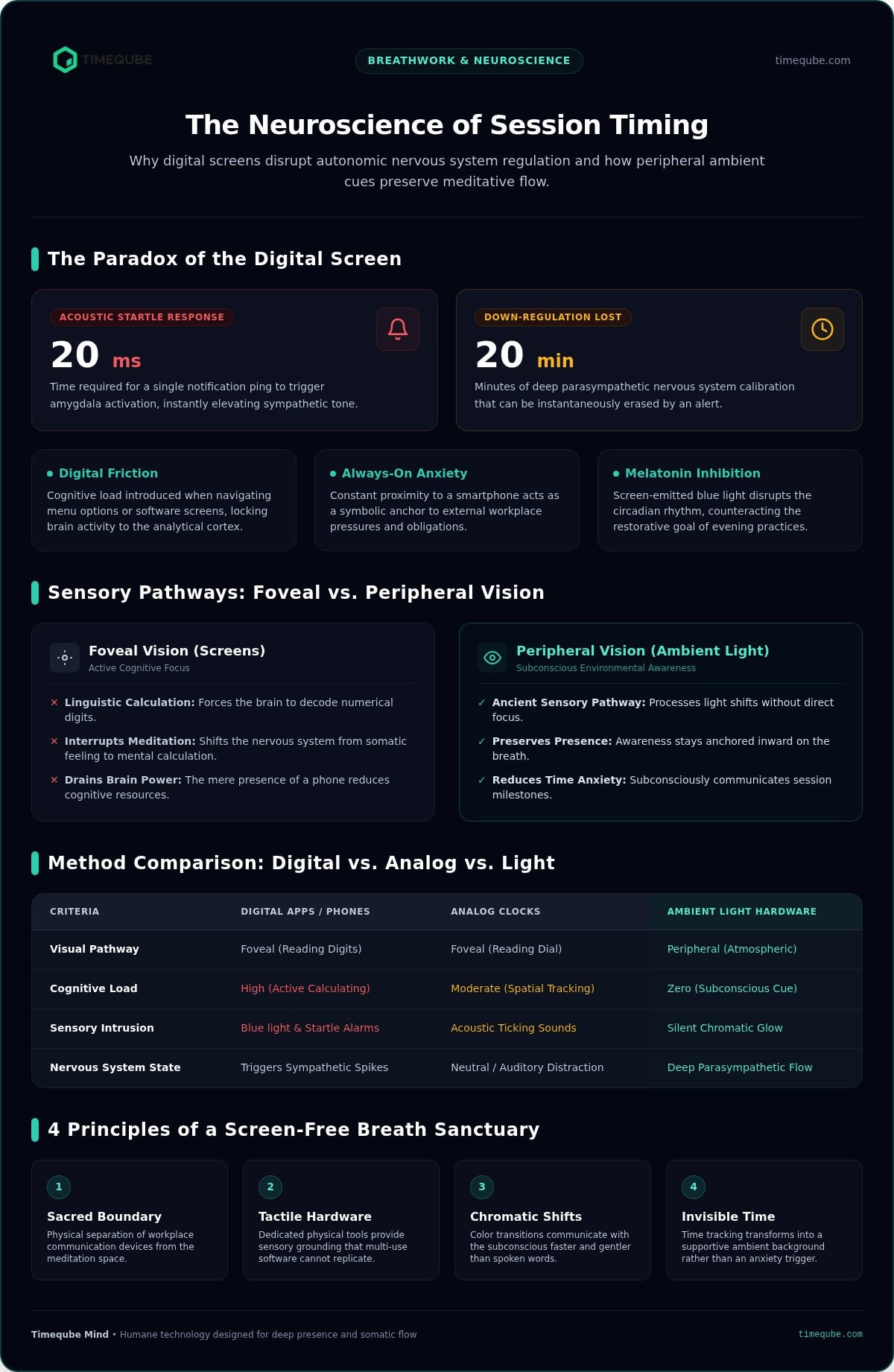
True relaxation requires the activation of the parasympathetic nervous system. Digital devices often prevent this transition by inducing digital friction. Digital friction is the cognitive load of navigating software during a session. When the brain must process screen interfaces or menu options, it stays tethered to the analytical mind. This prevents the practitioner from entering a state of deep somatic absorption.
To better understand how gentle visual cues facilitate rhythmic regulation, consider this practical demonstration:
The Problem with Smartphone Notifications
Smartphone alerts are not just interruptions; they’re biological triggers. A single notification ping can trigger an acoustic startle response, activating the amygdala in as little as 20 milliseconds. This sudden spike in sympathetic tone can instantly reset 20 minutes of nervous system down-regulation. Constant proximity to a phone fosters always-on anxiety, as the device remains a symbolic link to external pressures and stressors.
Blue Light and the Circadian Rhythm
Screen-based timers emit blue light that inhibits melatonin production. This is counterproductive for evening sessions designed to improve sleep quality. In traditional breathwork and pranayama, the sanctity of the environment is paramount. Physical, hardware-based tools provide a tactile grounding that software lacks. This reflects a growing demand for humane tech that respects human biology. Using a dedicated device like the Timeqube Mind helps establish a sacred boundary for your practice.
Professional facilitators understand that holding space requires the removal of distraction. Checking a digital countdown forces a shift from being to calculating. A physical timer allows the practitioner to track time subconsciously, maintaining the integrity of the session flow. It transforms time from a source of anxiety into a supportive, invisible structure.
The Science of Subconscious Time Management
Human perception is split between foveal and peripheral vision. Foveal vision allows us to read text and numbers, but it requires conscious effort and active focus. When you check a digital breathwork session timer, your brain must perform a linguistic calculation to interpret the digits. This small cognitive task is enough to break your meditative flow and pull you out of a deep somatic state.
Peripheral vision is different. It’s an ancient sensory pathway that monitors the environment for changes in light and movement without requiring direct focus. By using ambient light, you can track time milestones without ever looking away from your internal practice. This reduces time anxiety, the persistent worry about how much of the session remains. Research confirms that the mere presence of a smartphone drains cognitive resources even when it’s silent. Removing the phone and using a light-based cue restores your mental energy for the practice itself.
Peripheral Vision and the Autonomic Nervous System
The biological advantage of peripheral cues lies in their lack of intrusion. You don’t need to look at a clock to know where you are in your practice. Your brain senses the shift in the room’s atmosphere through the corners of your eyes. This keeps your attention anchored to your breath. You can learn more about how these visual triggers function in The Science of the Professional Meeting Timer. These cues maintain the user’s presence by removing the friction of screen interaction.
Color Psychology in Breathwork
Colors communicate with the subconscious mind faster than words. In a therapeutic setting, specific hues guide the nervous system through the session’s arc without triggering a startle response. The transition from Green to Amber to Red provides a wordless map for the mind.
- Green: Signifies safety and homeostasis, signaling that it’s safe for the body to begin down-regulating.
- Amber: Acts as a gentle transition, preparing the mind for the conclusion of the deep state.
- Red: Serves as a soft boundary, marking the completion of the session with a warm, non-threatening glow.
Professional therapists use these cues to pace sessions with clinical precision. It allows them to hold space for clients without the distraction of checking a watch. If you’re a facilitator or a serious solo practitioner, choosing a dedicated breathwork session timer like the Timeqube Mind can stabilize your environment. This sophisticated approach ensures the transition out of a session is as peaceful as the practice itself.
Comparing Breathwork Timing Methods: Digital vs. Analog vs. Light
Choosing a timing method depends entirely on your ultimate objective. If the goal is strict task management, numeric countdowns are highly effective. However, when the priority is deep somatic presence, your choice of a breathwork session timer must protect your psychological space. Different tools impact the autonomic nervous system in distinct ways, fundamentally shaping the quality of your practice.
Digital applications offer deep customizability, yet they demand continuous interaction. They require high-contrast screens that introduce blue light and cognitive fatigue. Conversely, traditional analog clocks present mechanical friction. The rhythmic ticking creates an external auditory anchor that can conflict with your natural breathing cadence. Additionally, standard clock faces are nearly impossible to read in the low-light environments best suited for triggering the body’s relaxation response.
The Downside of Auditory Alarms
Most software solutions rely on sudden acoustic signals to mark session milestones. Even a gentle chime can trigger an immediate sympathetic response if the brain is in a deep theta state. This sudden auditory burst disrupts the parasympathetic integration that occurs during the final minutes of a session. In contrast, group facilitators require seamless transitions to maintain collective focus. A silent, light-based shift allows participants to return to ordinary awareness without a jarring shock. This sensory-first methodology mirrors the clinical pacing strategies discussed in our analysis of Managing Time in Couples Therapy.
Physicality and Presence
Placing a dedicated physical object in your environment changes the psychology of your meditation space. A tangible instrument establishes a clear sensory boundary between everyday digital connectivity and restorative practice. This clean simplicity removes the hidden cognitive load associated with multifunction devices. The tactile reality of dedicated hardware grounds the physical space, whereas ephemeral apps evaporate into the background noise of digital notifications. By transitioning to a dedicated visual tool like Timeqube, you replace feature-heavy distractions with a quiet, elegant ally that respects your mental boundaries.
Creating a Distraction-Free Breathwork Sanctuary
Establishing a sanctuary is a deliberate act of psychological care. It requires more than just a quiet room. You must curate a space that speaks directly to the autonomic nervous system. By following a structured approach to environmental design, you can ensure that every session reaches its full therapeutic potential. A sanctuary is a place where the external world fades, allowing the internal landscape to become the primary focus.
Step one is the total elimination of digital noise. Remove all screens from the room, especially your smartphone. The smartphone is the ultimate intruder. Even when silent, its presence demands a portion of your cognitive bandwidth. Step two involves optimizing your lighting. High-intensity overhead lights trigger alertness and cortisol production. Instead, use soft, warm ambient light to signal that it’s safe for the body to down-regulate and enter a restorative state.
Step three is the introduction of a non-ticking, visual session manager. Auditory ticking creates a rhythmic pressure that can conflict with your natural breathing cadence. A silent breathwork session timer provides structure without the intrusion of sound. Finally, step four focuses on grounding the physical body through scent and texture. Use essential oils like frankincense or cedarwood to anchor your awareness. Natural fibers in your mats and blankets offer a tactile comfort that reinforces a sense of safety.
Sensory Mapping for Your Practice
Sensory mapping is the process of balancing auditory, visual, and tactile inputs to create a cohesive experience. Consistency is vital. When your setup remains the same, your brain recognizes these specific sensory cues as a signal to transition into a meditative state. This reduces the time needed to reach a deep state of presence. You can explore these concepts further in Tools for Therapeutic Space: Sensory Session Management. By removing environmental friction, you allow the mind to focus entirely on the mechanics of the breath.
Equipment Checklist for Professionals
Professional facilitators must prioritize the safety and focus of their clients. High-quality mats and bolsters are essential for maintaining physical comfort during long sessions. For managing the arc of the journey, practitioners prefer dedicated hardware like the Timeqube for Mind/Body Therapies. Hardware is the superior choice for a breathwork session timer because it eliminates the risk of notification leakage. Professionals understand that a phone buzzing in the corner can compromise the integrity of the entire therapeutic space. Dedicated tools ensure that the facilitator remains a calm, unobtrusive presence throughout the session.
Upgrade your sanctuary with professional visual timing hardware.
Elevating Your Practice with Timeqube Mind
The Timeqube Mind is a dedicated hardware instrument designed to facilitate deep somatic states. It’s encased in high-grade acrylic and functions as a silent, light-based breathwork session timer. Unlike consumer electronics, this device doesn’t require a screen or complex software navigation. It communicates through a chromatic sequence of Light Green, Yellow, Orange, and Violet. This specific palette is engineered to avoid the acute alarm triggers associated with traditional red countdowns, ensuring your nervous system remains in a state of quiet confidence.
Precision is integrated into its design through six universal presets: 15, 30, 45, 50, 60, and 90 minutes. These durations accommodate everything from brief morning resets to extended therapeutic journeys. The device charges via USB-C and provides up to 12 hours of continuous glow on a single charge. Its minimalist aesthetic complements any meditation altar or professional desk, acting as a functional piece of art that prioritizes mental well-being over digital connectivity.
Using a physical cube allows for true subconscious awareness. You don’t need to look directly at the timer to understand the session’s progress. Your brain registers the shifting luminosity through peripheral pathways. This ensures you stay present in the flow of your breath without the cognitive fatigue of checking a clock. It transforms time management from a source of friction into a supportive, invisible structure for your practice.
Why Therapists Choose Timeqube
Professional facilitators must maintain an environment of absolute safety and focus. Holding space for a client is difficult when you’re forced to glance at a watch or a smartphone screen. Specialized hardware projects an aura of professional intentionality that a consumer phone cannot match. It signals to the client that the space is sacred and free from external digital intrusion. This sensory-first approach is particularly effective for practitioners who focus on time management for neurodiversity, as it replaces overwhelming numeric data with intuitive visual cues.
Integrating Light into Your Daily Routine
A visual breathwork session timer isn’t just for professional sessions; it’s a tool for daily rituals. You can use light to signal the start and end of morning breathing exercises, creating a consistent anchor for your nervous system. For busy professionals, this method allows for effective timeboxing. You can commit to a 15-minute session with the certainty that you’ll be guided back to ordinary awareness gently. It removes the anxiety of oversleeping or losing track of your schedule, allowing for a deeper surrender to the practice.
Explore the Timeqube Mind for your practice and transition toward a distraction-free environment today.
Protecting the Sanctity of Your Practice
Restoring the nervous system requires an environment free from digital friction. We’ve explored how typical smartphone apps introduce cognitive load and blue light that undermine the very goals of meditation. By choosing a dedicated breathwork session timer, you establish a clear boundary between the chaotic digital world and your restorative sanctuary. This shift allows the mind to surrender to the flow of the breath without the persistent anxiety of checking a clock.
The transition to sensory-first time management is a choice favored by professional therapists worldwide to hold therapeutic space with clinical precision. Using 100% distraction-free hardware ensures your sessions remain uninterrupted by notifications or jarring auditory alarms. Peripheral light cues guide your subconscious mind through the session’s arc, allowing for a seamless return to ordinary awareness. It’s time to reclaim your focus and deepen your presence through intentional design.
Discover the Timeqube Mind for Distraction-Free Breathwork and experience the profound clarity of a practice anchored in light. You deserve a space that respects your biological need for stillness.
Frequently Asked Questions
Why is a visual timer better than a phone app for breathwork?
A visual timer eliminates digital friction and notification leakage. Smartphones induce cognitive load through blue light and the proximity of work-related alerts. In contrast, hardware-based solutions allow you to track time milestones through peripheral vision. This keeps your focus anchored on the breath rather than linguistic countdowns. It establishes a clear boundary between restorative practice and digital chaos, ensuring a deeper parasympathetic state.
Does the Timeqube Mind make any noise during the session?
No, the Timeqube Mind is entirely sound-free. It doesn’t contain speakers, chimes, or ticking mechanisms that could disrupt your meditative flow. This silence prevents the acoustic startle reflex, which sudden auditory alarms often trigger in deep states. By using only light transitions, it ensures that your session ends with a soft, chromatic shift rather than a jarring sound that could spike cortisol levels.
How long does the battery last on a visual breathwork timer?
The battery on this specialized breathwork session timer provides approximately 8 to 12 hours of continuous glow on a single charge. It charges via a standard USB-C port and can be used while plugged in for back-to-back sessions. This longevity is ideal for professional facilitators who lead multiple workshops throughout the day. The hardware is designed for reliability, ensuring the light remains steady and calibrated during long somatic journeys.
Can I use a visual timer for group breathwork classes?
Yes, visual timers are highly effective in group settings. The 75mm acrylic cube is designed to be visible from across a room, allowing all participants to sense the session’s progress simultaneously. Facilitators often place the device in a central location so that the changing atmosphere guides the collective energy. It removes the need for verbal time announcements, maintaining the integrity of the group’s shared meditative space without interruption.
What do the different colors on a breathwork timer represent?
The chromatic sequence is designed to guide the nervous system through a session’s arc. Light Green signifies the beginning and a state of safety. Yellow and Orange indicate the transition toward the final phase. Violet marks the soft completion of the session. Unlike the red lights found in industrial timers, these hues are non-threatening and intended to facilitate a peaceful return to ordinary awareness without triggering urgency.
Is the light from a visual timer bright enough to be distracting?
The light is designed to be sensed through peripheral vision rather than direct focus. It provides a gentle, ambient glow that changes luminosity and hue gradually. This ensures the signal is noticeable even through closed eyelids without being intrusive. The goal is to inform the subconscious mind about time milestones while allowing the conscious mind to stay focused on internal sensations and breathing mechanics.
Can I customize the session lengths on a Timeqube?
The Mind edition features six universal presets specifically chosen for therapeutic work: 15, 30, 45, 50, 60, and 90 minutes. You select these durations with a simple tap on the hardware. While these presets cover the vast majority of standard somatic practices, they’re fixed to ensure simplicity and a distraction-free experience. This lack of complex software menus prevents the digital friction that often accompanies smartphone applications.
How does a visual timer help with time blindness in meditation?
Time blindness often causes anxiety during meditation, as the practitioner worries about how much time has passed. A visual breathwork session timer provides a constant, non-intrusive stream of information. By glancing at the ambient color, the brain instantly understands its position in the session without performing calculations. This reduces the urge to check the time, allowing individuals with neurodiverse traits to feel more grounded and secure in their practice.