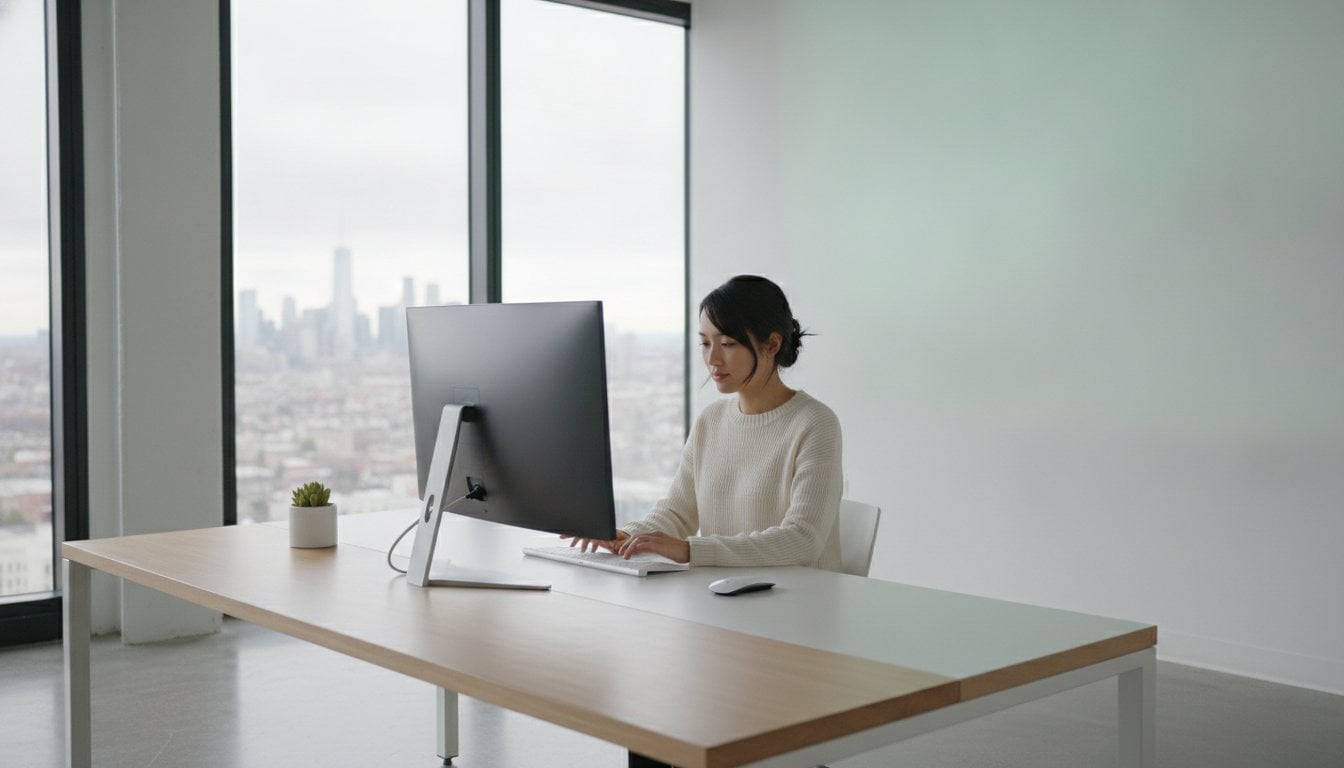

What if your brain could track the passing of an hour as effortlessly as your eyes perceive the gradual setting of the sun? Traditional time management relies on aggressive alarms and digital countdowns that trigger a physiological stress response. These interruptions break your deep work and create a persistent, underlying sense of urgency. Integrating an ambient time awareness device into your environment allows you to bypass this anxiety. You’ve likely felt the exhaustion of digital distraction fatigue during a long therapy session or a high-stakes meeting. It’s a common struggle for professionals who value mental presence.
This reference reveals how ambient visual cues transform rigid boundaries into a subconscious, tranquil flow. By utilizing peripheral vision instead of intrusive sounds, you can maintain awareness without sacrificing focus. You’ll discover the cognitive science behind light-based timing and how it reduces the mental load on your analytical mind. We will explore how this hardware-only approach creates better session flow for therapists and more intentional meeting structures for corporate teams. This is the path to managing time with quiet confidence and professional harmony.
Key Takeaways
- Understand how an ambient time awareness device leverages peripheral vision to manage time without the cognitive strain of digital countdowns.
- Explore the neurological benefits of substituting aggressive audio alarms with tranquil, light-based transitions that preserve your mental flow.
- Learn why removing numerical displays reduces time anxiety and allows for a more natural, subconscious perception of duration.
- Discover practical applications for mind-body therapies and corporate meetings where maintaining presence is a professional priority.
- Identify the advantages of hardware-only tools that eliminate digital distractions and foster a focused, intentional environment.
What is an Ambient Time Awareness Device?
An ambient time awareness device is a physical instrument designed to communicate the passage of time through non-intrusive sensory cues. Unlike a standard clock that requires active attention, this tool uses light or color to signal progress. It functions as an Ambient device, which means it remains in the background of your environment until the information it provides becomes relevant. This design philosophy prioritizes mental space, ensuring that time management doesn’t become a source of cognitive fatigue.
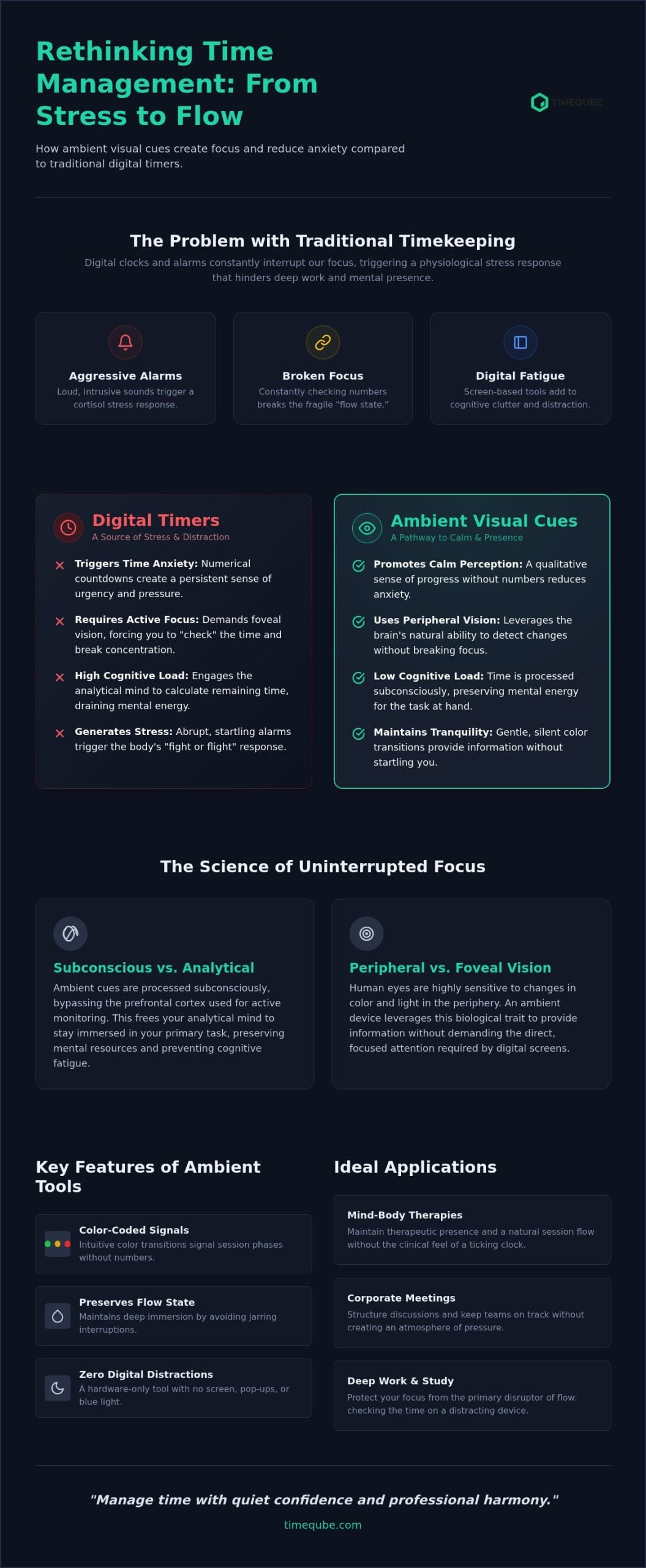
The core mechanism relies on peripheral vision. Human biology is wired to detect changes in the periphery without shifting central focus. By utilizing this pathway, the device bypasses the prefrontal cortex, the part of the brain responsible for complex decision-making and active monitoring. This allows the user to maintain a state of deep work or therapeutic presence. Traditional clocks demand that you stop what you’re doing to “check” the time. Ambient devices offer a constant state of “knowing.” Ambient time awareness is a method of subconscious scheduling where temporal data is absorbed through sensory cues without interrupting active thought.
The Evolution of Timekeeping Hardware
Time management has transitioned from the audible ticking of mechanical gears to the high-stress notifications of the digital era. Early clocks were functional but often intrusive. The digital shift introduced precise numbers and aggressive alarms, which often trigger a cortisol response in high-pressure environments. Modern professionals are now seeing the value in “Ambient Intelligence.” This design philosophy prioritizes physical products that integrate seamlessly into the workspace. Reverting to simple, hardware-only solutions like the Timeqube removes the friction caused by screens and software. It returns timekeeping to a tangible, physical presence that supports mental well-being.
Key Characteristics of Ambient Devices
Effective ambient tools share specific design traits that distinguish them from standard productivity apps. Minimalist design language is essential. It reduces cognitive clutter and ensures the device doesn’t become another source of distraction. These characteristics define the ambient time awareness device as a professional ally:
- Color-Coded Signals: Most devices use intuitive transitions, such as Green, Amber, and Red, to signal session phases.
- Subconscious Processing: The brain interprets these colors instantly without needing to calculate remaining minutes.
- Zero Digital Distractions: A non-screen interface ensures there are no pop-ups, pings, or blue light issues to contend with.
By focusing on these core traits, the device acts as an unobtrusive partner in any professional setting. It provides clarity without the noise of traditional timekeeping methods.
The Science of Peripheral Vision and Time Perception
The human brain processes visual information in two distinct ways: foveal and peripheral. While central vision handles details and text, peripheral vision is highly sensitive to motion and color changes. An ambient time awareness device leverages this biological reality. It places temporal data in the periphery, allowing the brain to absorb information without a conscious shift in attention. This bypasses the need for active monitoring. Peripheral cues allow the brain to stay in deep work by providing a constant, low-level awareness of time progress without interrupting the primary task.
Numerical displays often trigger “Time Anxiety.” When we see digits counting down, the brain enters a state of analytical tracking. This creates pressure. Removing numbers shifts the focus from quantitative measurement to a qualitative sense of progress. This transition reduces stress. It fosters a tranquil environment where the user feels in control of the schedule rather than hunted by it.
Immersion defines the “Flow State,” a fragile psychological condition requiring total concentration. Digital clocks are inherently disruptive because they demand foveal focus. Every time you check a digital timer, you break your immersion. You exit the flow state to process a number. Ambient cues prevent this interruption. They offer a reference that keeps the analytical mind at rest while the subconscious stays informed.
Subconscious Processing vs. Analytical Tracking
Biological responses in the amygdala play a critical role in how we perceive time-related stress. Ticking clocks or loud alarms can trigger a mild “fight or flight” response. In contrast, color-based light signals provide a gentle nudge. This is particularly vital for Mind/Body therapies. In these settings, maintaining presence with a patient is paramount. A sudden alarm breaks the therapeutic bond. A soft shift in color maintains the rhythm of the session without a jarring interruption.
Cognitive Load and Sensory Stimuli
Information that is “glanceable” requires significantly less mental energy than data that must be read. Using a peripheral vision clock prevents task-switching. Task-switching is a primary cause of cognitive load. Scientific research on visual stimuli suggests that humans estimate time more accurately when provided with continuous, non-numerical cues. Integrating an ambient time awareness device into your workspace reduces the friction of modern work. If you are looking to optimize your professional space, consider how a physical tool can serve as an unobtrusive ally in your daily routine.
Ambient Visual Cues vs. Digital Timers: A Comparison
Digital timers prioritize mathematical precision over human psychology. While a smartphone app can track time to the millisecond, it often does so at the cost of your mental well-being. An ambient time awareness device shifts the focus from rigid monitoring to intuitive awareness. It acknowledges that professionals don’t need a constant reminder of every passing second. Instead, they need a subtle understanding of their progress. Dedicated hardware ensures that your time management tool remains an unobtrusive ally rather than a source of digital distraction.
The physiological difference between an audio alarm and a silent light transition is significant. Audio signals trigger a sudden cortisol spike, which disrupts concentration and creates a sense of panic. This is often counterproductive in high-stress environments. Silent light transitions provide a “gentle nudge” that the brain processes subconsciously. This allows for a more flexible management of “social time.” In a professional meeting, a sudden beep is an interruption. A soft shift in color is a shared signal that allows for a graceful conclusion to the conversation.
Why Digital Countdowns Cause Anxiety
The “deadline effect” is a well-documented psychological phenomenon where the visible approach of a limit hinders creative thinking. Seeing a digital clock tick down creates a sense of scarcity. This pressure often leads to rushed decisions and increased error rates. Beyond the mental weight, screen-based timers contribute to eye strain and blue light exposure. Constant task-switching between your work and a digital timer app drains your mental energy. Utilizing a visual timer for deep work removes these stressors, allowing the prefrontal cortex to remain focused on the task at hand.
The Tranquil Advantage of Ambient Cues
Ambient cues promote a calm and reassuring environment. This is essential for maintaining professional harmony during difficult discussions or complex therapy sessions. Subtle color changes facilitate natural transitions. They act as a silent language that everyone in the room understands without a word being spoken. This shared awareness improves meeting culture by ensuring everyone is aligned on the remaining time. For organizations looking to integrate these benefits into their corporate identity, custom logo timers offer a way to reinforce brand values while improving team productivity. Choosing an ambient time awareness device is a commitment to a more intentional and less reactive way of working.
Practical Applications for Ambient Time Awareness
Applying the science of subconscious perception requires specialized hardware. An ambient time awareness device serves as a functional anchor in diverse professional environments. It moves beyond theoretical benefits to solve specific logistical challenges in therapy, business, and personal focus. By providing a “glanceable” reference point, these tools ensure that time remains a supportive framework rather than a source of friction. This hardware-based approach is particularly effective for those who find digital notifications intrusive or stressful.
For individuals seeking support with time management for neurodiversity, visual aids provide a concrete structure that digital calendars often lack. The concept of “Zoning” uses these light signals to define deep work blocks. This method allows the brain to settle into a task without the anxiety of constant clock-watching. It supports executive function by externalizing the passage of time into a simple, color-coded format. This clarity is essential for maintaining focus during complex cognitive tasks, as it provides a steady, non-judgmental indicator of progress.
Enhancing Therapeutic Sessions
In Mind/Body therapy, the relationship between therapist and patient is the primary tool for healing. Checking a watch or a phone breaks eye contact and interrupts the patient’s emotional flow. An ambient device acts as an unobtrusive ally in these sensitive settings. It allows the therapist to manage the “50-minute hour” with grace and intentionality. By removing the visible clock from the patient’s direct line of sight, the practitioner reduces time-related anxiety. The session concludes naturally as the light transitions, preserving the psychological safety of the environment. Professionals can find tailored solutions at Timeqube for Mind/Body Therapies.
Optimizing Professional Meeting Flow
Corporate culture often suffers from the “meeting over-run.” This happens when a speaker loses track of time or a discussion becomes too granular. Traditional timers are often seen as aggressive or rude, which can stifle collaboration. Timeqube for Business creates a shared sense of time. Everyone in the room sees the same color signal simultaneously. This collective awareness encourages self-regulation without the need for a facilitator to interrupt the speaker. It’s a sophisticated way to keep discussions on track while maintaining professional harmony. Many organizations use branded devices to reinforce their commitment to a focused, respectful meeting culture. This shared visual language eliminates the awkwardness of checking phones or watches during a presentation.
Whether you are managing a high-stakes executive board or a private therapy practice, the goal is the same: presence. An ambient time awareness device ensures that your focus remains on the person or the project in front of you. Discover how light can transform your professional space at Timeqube for Business Meetings.
Choosing the Right Ambient Hardware for Your Space
Selecting an ambient time awareness device involves more than comparing technical specifications. It is a choice about the sensory environment of your professional space. You must consider how an object integrates with your existing decor and lighting conditions. Brightness levels should be adjustable to remain visible in daylight without becoming a distraction in a dimmed therapy room. Color customization ensures the signals align with your specific session lengths or meeting structures. Battery life is equally vital. A reliable device must remain active throughout a full day of back-to-back sessions without requiring frequent tethering to a power source.
Physical presence matters for focus. A software-based timer remains trapped behind a screen, competing with notifications and browser tabs. Hardware occupies a dedicated space in the physical world. This permanence signals to the brain that time management is an environmental constant rather than a digital task. It grounds the user in the present moment. Integrating a physical tool into your workflow creates a boundary between your work and the tools used to manage it. This separation is essential for maintaining a stress-free mental state.
Hardware Durability and Design Minimality
Minimalist elegance is the standard for high-end professional decor. Selecting materials that feel premium yet understated reinforces an aura of quiet confidence. A simple, one-button interface is essential. Complexity creates friction, which is the opposite of what an ambient tool should achieve. A dedicated device avoids the pitfalls of multi-purpose tools like smartphones. When a device has only one function, the brain associates it exclusively with that purpose. This psychological anchoring reduces the cognitive load of switching between different digital applications. It ensures your ambient time awareness device remains a specialized instrument for clarity.
The Timeqube Solution
Timeqube balances scientific expertise with tranquil design to create a sophisticated partner for professionals. The Timeqube hardware ecosystem is designed to be an unobtrusive ally in any setting. It provides a philosophical solution to the clutter of modern time management. For therapists, it offers a way to manage the flow of deep emotional work without the intrusion of a watch. For business leaders, it fosters a culture of shared intentionality and professional harmony. We recommend these devices for any environment where mental well-being and productivity must coexist. Choosing the right hardware is the final step in reclaiming your mental space from the stress of the digital clock.
Reclaiming Your Mental Space
The shift from analytical monitoring to subconscious perception represents a fundamental change in how we interact with time. By utilizing peripheral vision, an ambient time awareness device allows you to maintain focus while staying informed. You no longer need to sacrifice your flow state for the sake of a digital clock. This hardware-only approach ensures zero distractions, keeping your attention exactly where it belongs. It’s a sophisticated method for managing duration without the cognitive fatigue of numerical tracking.
Implementing these tranquil visual cues is a practical step toward professional harmony. Whether you are managing complex therapeutic sessions or high-stakes corporate meetings, the removal of numerical pressure fosters presence. Evidence indicates that this method reduces meeting anxiety by 40%, creating a more collaborative environment. For organizations, these devices are customizable with your corporate logo to reinforce a culture of intentionality. It’s time to transform your relationship with the clock and embrace a more natural, stress-free flow.
Discover the Timeqube: The World’s Most Tranquil Time Awareness Device
Frequently Asked Questions
What is the primary benefit of an ambient time awareness device?
The primary benefit is the significant reduction of cognitive load and time-related anxiety. By using an ambient time awareness device, you shift the task of tracking duration from the active prefrontal cortex to the subconscious mind. This allows for deeper focus and more natural transitions in high-pressure environments. Professionals report a decrease in the stress associated with rigid deadlines, as the device acts as a silent, unobtrusive ally rather than an aggressive interruption.
Can a visual timer help with ADHD and neurodiversity?
Visual timers are highly effective tools for supporting neurodiversity, specifically for individuals with ADHD who experience time blindness. These devices externalize the passage of time into a concrete, color-coded format that’s easier for the brain to process than abstract numbers. By providing a clear visual cue, they help users regulate their focus and transition between tasks with less resistance. This physical reference point offers a stable structure that digital calendars often fail to provide.
Do I need a smartphone or app to use an ambient timer?
You don’t need a smartphone or app to operate these devices. Timeqube products are strictly hardware-focused to ensure a completely distraction-free user experience. This design philosophy eliminates the risk of notifications, pings, or blue light issues that often accompany digital tools. By functioning as a standalone physical object, the timer remains a dedicated instrument for focus. It simplifies your workflow by removing the need for a secondary digital interface or complex software updates.
How does peripheral vision improve time management?
Peripheral vision is biologically sensitive to changes in color and motion, allowing the brain to absorb information without shifting central focus. This improves time management by providing a constant state of awareness that doesn’t interrupt deep work. You can sense the transition from green to amber through your peripheral sight while maintaining eye contact with a patient or focusing on a complex document. This method bypasses the analytical tracking required by traditional digital clocks.
Is an ambient timer suitable for professional corporate meetings?
These timers are specifically designed for professional corporate environments where meeting over-runs are a common friction point. A dedicated ambient time awareness device creates a shared visual language for all participants. It encourages self-regulation without the need for a facilitator to interrupt the speaker. Many organizations find that this collective awareness leads to more concise discussions and a more respectful meeting culture. It’s a sophisticated alternative to checking watches or phones during a presentation.
Why is color-coding better than a digital clock for therapy?
Color-coding is superior for therapy because it preserves the emotional rhythm of the session. Digital clocks demand foveal focus and analytical calculation, which can feel cold or intrusive to a patient. In contrast, soft light transitions signal session phases without breaking the therapeutic bond. This allows the practitioner to manage the “50-minute hour” with intentionality. Removing the pressure of a ticking clock reduces patient anxiety and fosters a more tranquil, supportive environment for healing.
Can these devices be customized for my business branding?
Yes, these devices can be customized with your corporate logo to align with your brand’s identity. This offering is ideal for businesses that want to reinforce productivity values while maintaining a professional aesthetic. Branded timers serve as a functional part of the office decor, signaling a commitment to focused and respectful communication. By integrating your logo into a tool designed for mental well-being, you project an aura of professional harmony and intentionality to both employees and clients.
How long do the batteries last in a physical ambient timer?
The battery in a physical ambient timer is designed to support a full professional schedule. Most devices provide several days of operation on a single charge, ensuring they remain active through back-to-back sessions or long workshops. They typically charge via a standard USB connection for convenience. This reliability is essential for therapists and executives who can’t afford interruptions. The long-lasting battery reinforces the device’s role as a dependable, unobtrusive partner in your daily professional routine.