

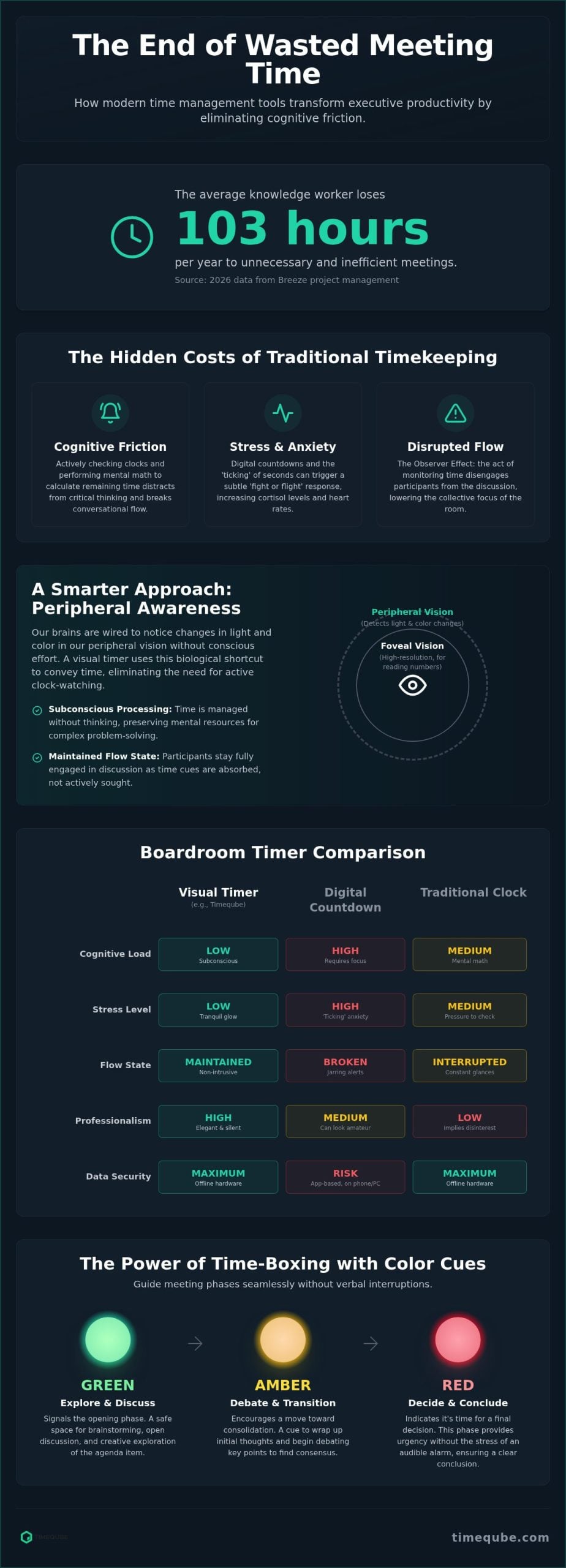
The average knowledge worker loses 103 hours per year to unnecessary meetings according to 2026 data from Breeze project management. This inefficiency often stems from a lack of temporal structure or the intrusive stress of digital countdowns. Integrating a dedicated visual timer for boardrooms offers a sophisticated solution to this friction. It replaces the jarring nature of traditional timekeeping with a tranquil, light-based signal that supports executive presence.
Meeting fatigue is often exacerbated by the constant checking of clocks, which spikes cortisol and breaks the flow of discussion. You’ll discover how a visual timer for boardrooms transforms productivity by reducing cognitive load and eliminating the anxiety of the ‘ticking’ screen. This guide examines why a visual timer for boardrooms is the superior choice for maintaining professional harmony while ensuring every agenda item receives the attention it deserves.
We’ll explore the biological science of peripheral vision and the specific psychological impact of color cues on group sentiment. You’ll also learn how a visual timer for boardrooms integrates into your existing corporate framework to ensure every high-stakes discussion reaches a clear, unhurried conclusion without the need for audible interruptions.
Key Takeaways
- Transition from active time-monitoring to subconscious awareness to eliminate the cognitive friction caused by traditional clocks.
- Leverage the biology of peripheral vision to process color-coded light cues without interrupting the deep focus required for executive discussion.
- Identify why a physical visual timer for boardrooms is the most secure and professional choice for data-sensitive corporate environments.
- Master strategic placement and introduction techniques to integrate time-management tools into high-profile meetings without causing social friction.
- Reduce meeting anxiety by replacing high-stress digital countdowns with a tranquil, hardware-based approach to professional timekeeping.
The Psychology of Time Awareness in the Boardroom
The Observer Effect in professional settings describes a specific cognitive disruption. When a participant actively checks a clock, they disengage from the present conversation. This moment of disengagement breaks the flow of critical thinking. The psychology of time perception suggests that our subjective experience of duration is easily influenced by external stimuli. A digital countdown doesn’t just inform; it demands focus, pulling the brain away from complex decision making.
Active monitoring requires the prefrontal cortex to translate symbols into meaning. Subconscious awareness, however, processes information through the peripheral visual system. By using a visual timer for boardrooms, executives can absorb temporal data without conscious effort. This tool acts as a cognitive prosthetic, supporting the brain’s natural executive functions by externalizing the passage of time. It removes the internal burden of tracking minutes, allowing for deeper presence during high-stakes discussions.
The Zeigarnik Effect states that the human mind remains occupied with unfinished tasks. In a boardroom, an unmanaged agenda creates mental clutter. This background noise reduces the quality of the current discussion. Precise time management ensures each topic is concluded, allowing the brain to move forward without lingering cognitive residue. A visual cue helps the team reach closure on individual items before the next phase begins.
Why Traditional Clocks Fail High-Stakes Meetings
Traditional clocks introduce friction into the executive environment. Digital displays often trigger a subtle stress response. The sight of ticking seconds can mimic the ‘fight or flight’ mechanism, increasing heart rates and anxiety. Analog clocks are equally problematic. They require a participant to perform mental arithmetic to calculate remaining time. This ‘distraction tax’ lowers the collective IQ of the room as focus shifts from the speaker to the wall clock.
The Concept of Time-Boxing for Executives
Time-boxing is a disciplined approach to leadership. It involves setting strict boundaries for different meeting phases. A visual timer for boardrooms facilitates these transitions through color. Green signals the opening phase of exploration. Amber encourages a move toward debate. Red indicates it’s time for a final decision. These cues provide urgency without the intrusive noise of an alarm. They allow for a seamless flow between the opening, debate, and decision-making stages of an agenda. This structured approach respects the mental well-being of all participants while ensuring maximum productivity.
The Science of Peripheral Vision and Color Cues
Human vision is split into two distinct systems: foveal and peripheral. Foveal vision is high-resolution and occupies the center of our gaze. It’s the system we use to read text or interpret numbers on a digital clock. Peripheral vision covers the remainder of the visual field. It’s biologically tuned to detect motion and changes in light. Research regarding color awareness in peripheral vision reveals that while our central focus is sharp, our brain continuously monitors our surroundings for environmental shifts.
A visual timer for boardrooms leverages this biological reality. The brain processes light and color significantly faster than it decodes numerical text. Numbers require cognitive translation. Color triggers an immediate, visceral response. This ‘Silent Signal’ allows a meeting lead to communicate temporal boundaries without interrupting a speaker. It maintains the social harmony of the room while ensuring the schedule remains intact.
Subconscious Processing: Managing Time Without Thinking
Cognitive load is the total amount of mental effort being used in the working memory. Constantly checking a clock adds to this load, stealing resources from the primary task. Peripheral Time Awareness is a productivity multiplier that allows participants to remain in a state of flow. By using a gentle glow in the corner of the eye, a visual timer for boardrooms removes the need for active time-tracking. The brain registers the transition from green to amber subconsciously. This prepares the mind for an upcoming shift in topic without causing a sudden spike in cortisol.
The Impact of Color on Meeting Sentiment
Color acts as a psychological anchor for meeting dynamics. It guides the emotional temperature of the room through three distinct phases:
- Green: This hue promotes a sense of safety and openness. It’s the ideal environment for brainstorming and creative exploration.
- Amber: The shift to amber signals the need for synthesis. It encourages participants to begin building consensus and summarizing their points.
- Red: This final signal indicates the necessity for closure. It prompts the group to finalize decisions and prepare for the next agenda item.
Managing these transitions through light creates a tranquil atmosphere. It replaces the jarring nature of alarms with a sophisticated visual language. Leaders who prioritize mental clarity often find that integrating dedicated hardware into their space transforms the cadence of every discussion.
Comparing Boardroom Timers: Visual vs. Digital vs. Traditional
Selecting the right tool for an executive environment requires an understanding of cognitive friction. Traditional wall clocks provide a static reference point, but they fail to guide the rhythm of a discussion. Digital timers, while precise, often feel clinical or aggressive. A dedicated visual timer for boardrooms bridges this gap by offering a non-intrusive, aesthetic solution that aligns with the psychology of effective meetings. It transforms time from a looming deadline into a calm, shared awareness.
Professionalism in the boardroom is often defined by the absence of friction. Many generic “cube” timers found on major retail sites are designed for kitchens or classrooms. They are frequently made of cheap plastic and rely on high-pitched beeps. Using such tools in a high-stakes executive setting creates a professionalism gap. It signals a lack of intentionality. In contrast, hardware-only solutions are superior for data-sensitive environments. Because they don’t require internet connectivity or software installations, they present zero risk to corporate security. You can find more about the science of professional meeting timers and why light outpaces digital displays.
Physical Hardware vs. Digital Software
Digital software introduces the “tab-switching” dilemma. When a facilitator must switch screens to check a timer, they momentarily abandon their engagement with the group. This subtle shift breaks the collective focus. Physical hardware remains a constant, shared reference point. It occupies a permanent space on the table, commanding a level of respect that a background app cannot achieve. By removing the timer from a smartphone or laptop, you also eliminate the notification trap. There’s no risk of a personal text or email banner disrupting the executive flow. A physical visual timer for boardrooms creates a dedicated space for temporal focus.
Silent Cues vs. Audible Alarms
The sound of a buzzer is the ultimate meeting-flow killer. It creates a jarring interruption that forces the brain to switch from deep thought to an emergency response. This is particularly problematic in neuro-inclusive environments where participants may have sensory sensitivities. A fading light cue offers a much more graceful transition. It allows a speaker to finish their sentence naturally without competing with a beep. This tranquil approach ensures that the energy of the room remains focused on consensus rather than the clock. Replacing sound with light respects the mental space of every participant.
Implementing Visual Timers in Professional Environments
Integrating a new tool into an executive setting requires social intelligence. You shouldn’t present the device as a corrective measure for poor timekeeping. Instead, frame it as a commitment to collective mental space and decision-making quality. This subtle shift in narrative prevents the tool from feeling patronizing. It positions the technology as a sophisticated ally that protects the team’s most valuable asset: their focus. Successful adoption begins with a clear explanation of how the device reduces cognitive fatigue for everyone in the room.
Strategic Placement for Maximum Efficacy
The efficacy of a visual timer for boardrooms depends heavily on its physical location. To leverage subconscious processing, place the device in the peripheral sweet spot. This area is typically 30 to 45 degrees from the participants’ primary center of focus. When positioned here, the brain registers color changes without requiring a conscious shift in gaze. Visibility is another critical factor. The timer must be visible to every participant, not just the chairperson. This creates a shared sense of accountability and transparency that digital clocks fail to provide.
Modern boardrooms often feature varied lighting conditions, from bright morning sun to dimmed presentation modes. High-quality hardware allows for adjustable light intensity to match these environments. You should ensure the glow is bright enough to be registered subconsciously but soft enough to avoid becoming a central distraction. Achieving this balance maintains the tranquil atmosphere necessary for high-level deliberation. It ensures the signal remains a background presence rather than an intrusive spotlight.
Standardizing Meeting Protocols with Visual Cues
Standardizing how your organization responds to color cues is essential for seamless transitions. You might define the Green phase as a period of uninterrupted contribution. Amber signals the start of the consensus-building phase. Red indicates an immediate move to the next agenda item. These clear protocols reduce the need for verbal interruptions, which often derail the momentum of a speaker. This visual accountability is particularly effective for Executive Pitches or Lightning Talks where every second counts.
Integrating your visual timer for boardrooms into existing frameworks like Agile or Lean further refines the executive workflow. It ensures that every member receives equal air time, preventing the discussion from being dominated by a single voice. Many organizations report that visual accountability helps reduce meeting bloat significantly. By creating a tangible boundary for time, you foster a culture of respect and precision. To enhance your professional environment, consider integrating a Timeqube for Business Meetings into your next executive session.
The Timeqube Advantage: Elegance Meets Psychology
Timeqube represents a fundamental shift in how high-performance environments manage their most finite resource. It is a minimalist fixture designed to sit unobtrusively on a boardroom table. Unlike digital tools that compete for your attention, this visual timer for boardrooms operates on the principle of subtraction. It removes the anxiety of the ticking clock and replaces it with a steady, calming presence. By choosing dedicated hardware, you protect the boardroom from the digital noise that often fractures executive focus.
Executive Design and Branded Presence
High-level environments require tools that match their aesthetic standards. Moving beyond the translucent plastic look of educational aids, Timeqube uses premium materials that complement modern corporate interiors. A customized Timeqube allows organizations to integrate their brand identity directly into their productivity workflow. Seeing a corporate logo on a device dedicated to mental clarity reinforces a culture of intentionality. It transforms a simple tool into a statement of values. This level of finish also makes the device an excellent corporate gift for high-value partners who appreciate sophisticated design and professional harmony.
Versatility Across Professional Settings
The production of such high-end corporate tools involves a rigorous journey from initial R&D to final assembly. To learn more about the engineering expertise behind these types of specialized devices, you can discover Keiteq Co Ltd, a firm dedicated to end-to-end product development and manufacturing management.
The application of visual cues extends beyond the executive suite. The same principles that enhance a board meeting are equally effective in mind/body therapy sessions, where presence is paramount. In these settings, the device ensures that the transition out of a session is as tranquil as the session itself. For those navigating the complexities of hybrid work, using a Timeqube for business meetings acts as a powerful antidote to Zoom fatigue. It provides a physical anchor in an increasingly digital world, ensuring that time management remains a background process rather than a foreground distraction.
The “Unplugged” philosophy is perhaps the ultimate luxury in 2026. A zero-software approach means there are no updates to manage, no batteries to drain unexpectedly, and no data privacy concerns. It is a pure, sensory solution to a complex psychological problem. By bridging the gap between mindfulness and productivity, this visual timer for boardrooms allows leaders to maintain an aura of professional harmony while ensuring every minute is used with purpose. It is a thoughtful innovator for the modern expert who values mental space.
Cultivating a Culture of Intentional Presence
Mastering time in the boardroom is a psychological challenge. It’s not a technical one. You now understand how peripheral light cues eliminate the anxiety of digital countdowns while protecting cognitive resources. By leveraging the biology of human vision, you can maintain deep focus and social harmony during high-stakes discussions. A dedicated visual timer for boardrooms transforms time from a source of stress into a tool for professional clarity. It ensures that every participant remains present and engaged throughout the session.
Timeqube is scientifically designed for subconscious time awareness. It’s used by industry-leading professionals globally to foster environments of quiet confidence. With custom logo options for corporate branding, the device serves as a sophisticated fixture in any executive space. It’s time to move beyond the distraction of screens. Embrace a more mindful approach to leadership productivity. Every meeting is an opportunity to practice precision and respect for mental space.
Elevate your boardroom productivity with Timeqube today. Your leadership team deserves a space where focus is the priority and every discussion flows with effortless precision.
Frequently Asked Questions
Why is a visual timer better than a standard clock for boardrooms?
Standard clocks require active mental calculation and constant checking, which breaks focus. A visual timer for boardrooms uses color-coded light to communicate time subconsciously. This removes the distraction tax and cognitive load associated with reading numbers. It provides a shared, ambient reference point that helps everyone stay on the same page without needing to look away from the speaker or interrupt the discussion flow.
Does a light-based timer distract participants during high-stakes debates?
Light-based timers are designed to be non-intrusive by using the biology of peripheral vision. Unlike a digital screen or a ticking clock, the soft glow exists at the edge of the visual field. It doesn’t demand central focus or interrupt the flow of a high-stakes debate. Instead, it provides a gentle, silent signal that the brain registers without a conscious shift in attention, maintaining a tranquil environment.
How do you explain the use of a visual timer to senior executives?
Frame the tool as a sophisticated cognitive prosthetic that protects their mental energy. Explain that it’s designed to reduce meeting fatigue and cognitive load by removing the need for active time-tracking. Position it as a way to ensure every member receives equal air time and that sessions remain high-impact. Emphasize the science of subconscious processing and the removal of digital distractions to align with their need for efficiency.
Can a physical timer be used in hybrid or remote boardroom meetings?
Physical timers are exceptionally effective in hybrid setups as a tangible anchor for time. When placed within view of the boardroom camera, remote participants see the same color cues as those in the room. This creates a unified temporal experience, bridging the gap between physical and digital spaces. It serves as a physical antidote to Zoom fatigue by providing a non-screen-based reference that everyone can trust and follow.
What are the benefits of a hardware-only timer over a mobile app?
Hardware-only solutions eliminate the notification trap and digital distractions inherent in smartphone apps. A physical device commands more respect in a professional setting and presents zero security risk for data-sensitive environments. It doesn’t require internet connectivity, software updates, or tab-switching. This unplugged approach ensures the timer remains a dedicated, reliable fixture that doesn’t compete for screen space or mental bandwidth, functioning as a pure, sensory solution.
How does peripheral vision help in managing meeting time?
Peripheral vision is biologically tuned to detect changes in light and color faster than the foveal system decodes text. By placing the visual timer for boardrooms in the periphery, the brain processes the Amber or Red transition subconsciously. This allows participants to stay in a state of flow during complex discussions. It removes the friction of looking away to read a clock, allowing for continuous, focused engagement with the group.
Is it possible to customize the timer with a company logo?
Yes, customizing the device with a corporate logo is a standard option for professional environments. This integration reinforces brand consistency and signals a culture of intentionality and precision. Seeing the company’s identity on a high-end productivity tool elevates the boardroom’s aesthetic. It moves away from the generic look of classroom aids and positions the device as a bespoke, professional fixture tailored for high-level executive leadership teams and their partners.
What happens when the timer reaches the Red phase?
The Red phase serves as a silent, final signal that a specific agenda item or discussion must conclude. It doesn’t use a jarring alarm or buzzer, which would kill the meeting’s flow. Instead, the steady red light prompts the group to finalize decisions and transition to the next phase. This clear visual boundary ensures that meetings end on time, respecting the schedules and mental well-being of all high-level participants involved.