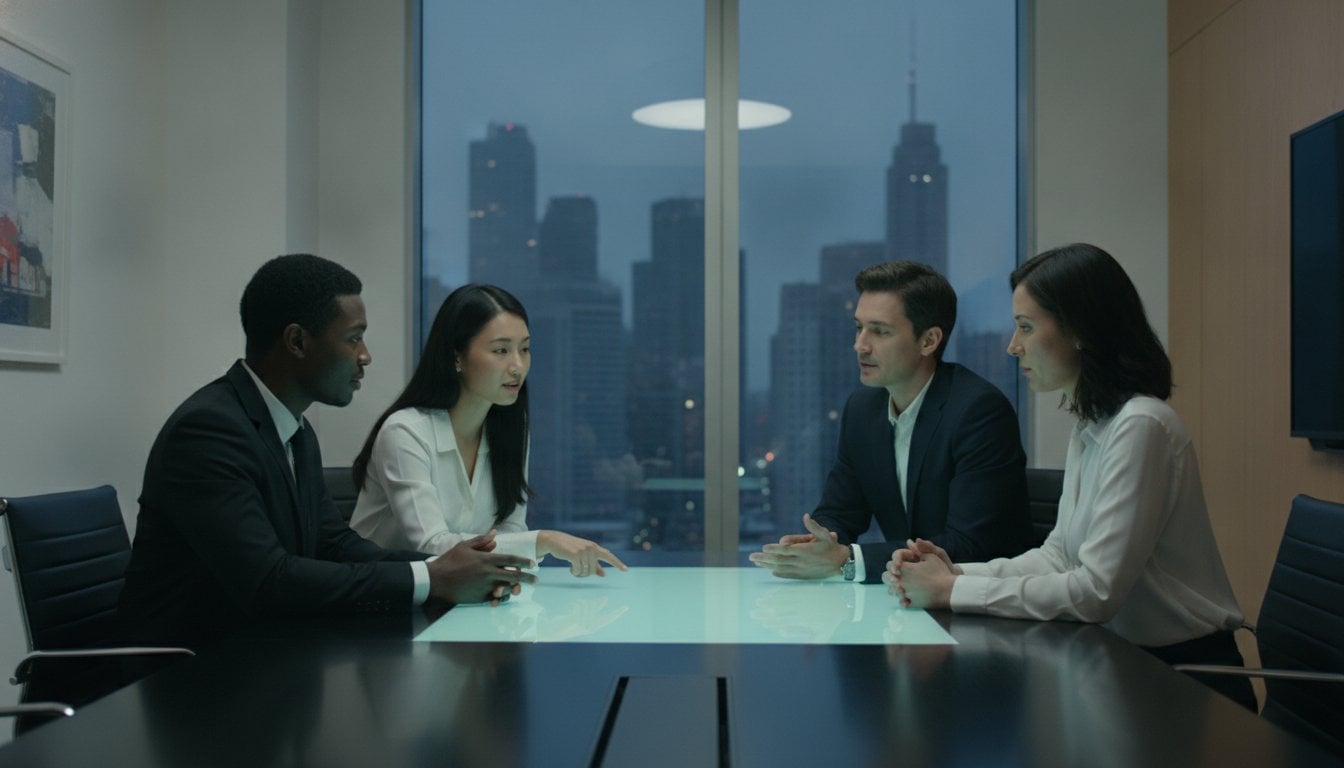

The standard meeting has become a primary source of biological stress. When a discussion drifts, the mental load of tracking minutes while maintaining social grace leads to cognitive fatigue. You shouldn’t have to choose between productivity and professional harmony. Finding a polite way to signal time in a meeting is often the difference between a successful collaboration and a wasted hour. Interruption creates friction. Silence allows inefficiency to thrive.
We understand the anxiety of cutting off a senior leader or an emotional client. It feels intrusive. However, true professional respect involves honoring everyone’s mental space and schedule. This guide reveals how to master meeting transitions using psychological cues and minimalist etiquette. You’ll learn to implement sensory signals that guide the group subconsciously, reducing the need for verbal interruptions. We’ll explore how to establish a frictionless meeting culture that prioritizes presence over pressure and intentionality.
Key Takeaways
- Understand the “interruption paradox” and how verbal signals can disrupt cognitive flow during high-stakes discussions.
- Master the “Bridge and Pivot” technique as a polite way to signal time in a meeting without causing social friction.
- Leverage the science of peripheral vision to create ambient time awareness, allowing the brain to process schedules subconsciously.
- Establish a frictionless protocol by introducing neutral, physical cues that act as silent facilitators for the entire group.
- Shift from digital distractions to hardware-based solutions that preserve mental well-being and professional harmony.
The Social Dilemma: Why Signalling Time in Meetings Feels Impolite
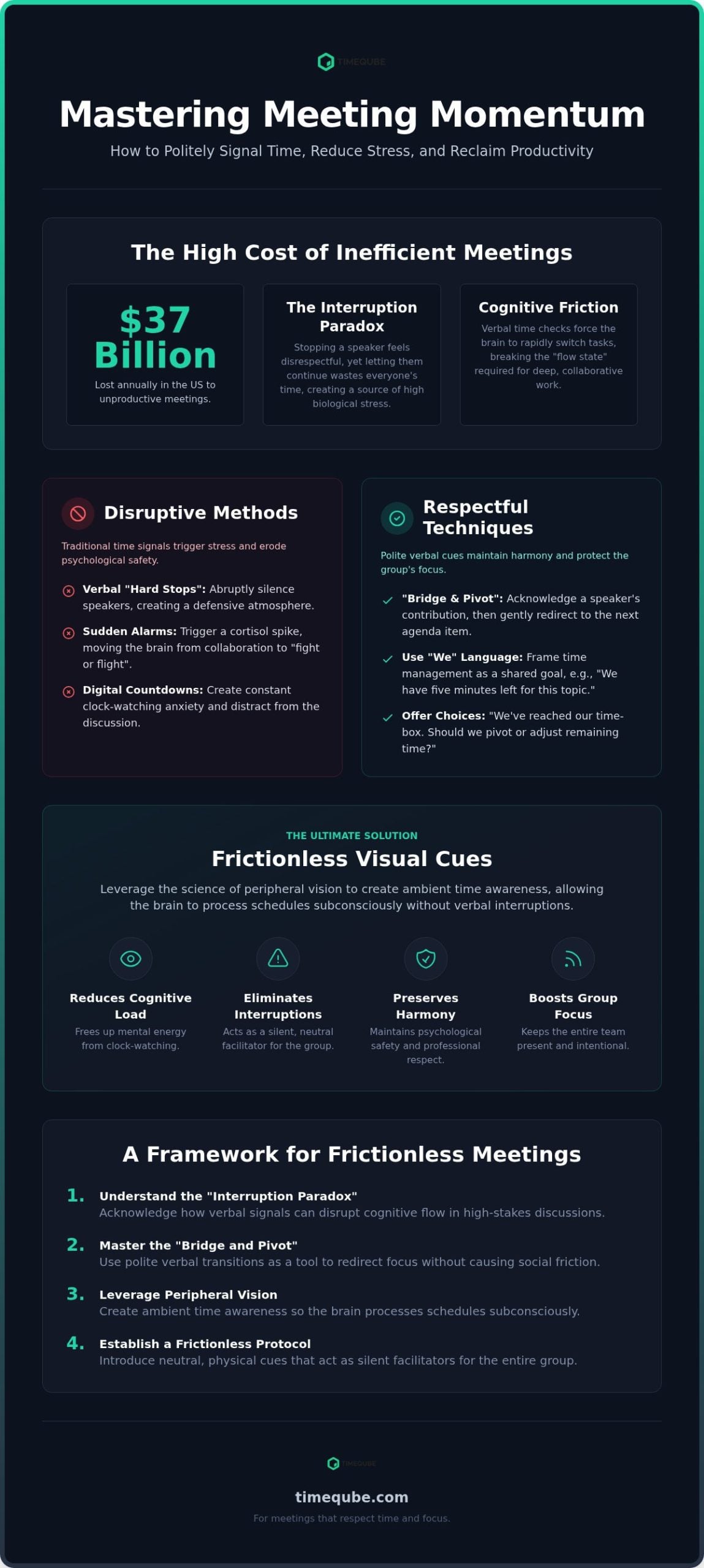
Professional interactions are governed by unwritten rules of social grace. We often perceive silence as agreement and interruption as aggression. This creates the “Interruption Paradox.” While every participant wants to finish on schedule, the act of stopping a speaker feels like a violation of respect. Finding a polite way to signal time in a meeting becomes a source of significant internal tension. We prioritize the immediate comfort of the speaker over the collective productivity of the group.
This tension is rooted in biology. Verbal interruptions break the “flow state,” a psychological condition where deep focus occurs. When a facilitator speaks up to check the clock, the brain must rapidly switch tasks. This creates cognitive friction. Research into the study of time in nonverbal communication shows that how we perceive these intervals affects our professional relationships. Digital countdowns and sudden alarms only worsen the issue. These aggressive signals trigger a cortisol spike, moving the brain from a state of collaboration to one of defensive stress.
To better understand this concept, watch this helpful video:
The burden of time management usually falls on the most junior or most anxious person in the room. This creates an unfair power dynamic. Those with the least social capital are forced to police those with the most. It’s an exhausting mental load that leads to burnout and resentment. When a polite way to signal time in a meeting isn’t established, the session inevitably drifts into inefficiency.
The Anxiety of the Verbal Interruption
Stopping a speaker involves complex power dynamics. In high-stakes environments, a verbal “hard stop” can trigger a fight or flight response. This shuts down the creative centers of the brain. Psychological safety relies on the belief that one can speak without being abruptly silenced. When interruptions are the only tool for timekeeping, they erode the trust necessary for open dialogue. The facilitator is no longer a partner; they become a barrier to the conversation.
The Hidden Cost of Overrunning Sessions
The “10-minute overrun” seems minor in isolation. Across an organization, these delays compound into thousands of lost hours. It’s a systemic drain on productivity. According to data from Lucid Meetings, an estimated $37 billion is lost annually in the US due to unproductive sessions. Consistently exceeding scheduled limits signals a lack of respect for the team’s mental space. This poor signaling behavior eventually leads to meeting fatigue. Decisions made in the final, rushed minutes are often lower in quality. The brain is tired. It prioritizes ending the session over finding the best solution.
Verbal Etiquette: Professional Phrases to Wrap Up Conversations
Mastering the “Bridge and Pivot” allows a facilitator to acknowledge a speaker’s value while redirecting the group’s focus. It’s a sophisticated method of maintaining momentum. By using “We” language, you frame time management as a collective responsibility rather than a personal critique. Instead of saying “You are over time,” try “We have five minutes left for this topic.” This shifts the focus to the shared goal of designing and facilitating meetings that respect everyone’s schedule.
Navigating power dynamics requires precision. When you need a polite way to signal time in a meeting with a senior stakeholder, lead with a summary of their contribution. This demonstrates active listening and reduces the risk of social friction. A calm, direct statement regarding the remaining agenda items ensures the leader feels heard while recognizing the temporal constraints of the session. It’s about honoring the person while protecting the process.
Soft Transitions for Collaborative Environments
Brainstorming requires a delicate balance between creativity and structure. To keep the energy high without losing the schedule, use phrases that validate the creative process while signaling a shift. Effective options include:
- “This is a vital insight; let’s capture it in the parking lot so we can explore it fully after we address the next item.”
- “We’ve reached the end of our time-box for this idea. Should we pivot to the next goal or adjust our remaining time?”
- “I want to ensure we give the final topic the same depth we’ve given this one. Let’s transition.”
Time-boxing acts as a shared boundary. It provides a sense of security, knowing that the most important topics will receive adequate attention without the session descending into chaos. A polite way to signal time in a meeting is often more about setting these expectations early than the interruption itself.
Direct Closing Phrases for High-Stakes Sessions
In sessions with immediate hard stops, clarity is essential. A “Summary Closing” wraps up the discussion by highlighting key takeaways. This provides a sense of completion and psychological closure. For inclusive communication, consider how your verbal cues affect the whole team. Some individuals process auditory information differently and may find verbal interruptions jarring. You can find more about inclusive strategies in this guide on Time Management for Neurodiversity. Truly effective timekeeping often requires a multi-sensory approach. For teams seeking a more visual, less verbal approach, exploring Timeqube for Business Meetings can remove the need for scripted interruptions entirely, allowing the conversation to conclude naturally.
The Psychology of Visual Cues: Why Sight Trumps Sound
Human perception is heavily weighted toward visual stimuli. We process visual information significantly faster than text. This biological reality makes visual signals the most polite way to signal time in a meeting. Instead of a jarring verbal interruption, a subtle shift in light provides “Ambient Time Awareness.” This is the ability to sense time passing without direct focus. It preserves the mental space of both the speaker and the listeners. By utilizing light, you remove the friction of verbal task-switching.
Peripheral Vision and Reduced Cognitive Load
Our peripheral vision is a sophisticated evolutionary tool. It’s designed to detect environmental changes while our central vision remains locked on a primary task. Processing time cues in the periphery offers a significant biological advantage. Reading a digital clock like “02:14” requires a conscious shift in attention. This act forces the brain to switch tasks, which increases cognitive load and causes fatigue. Seeing a soft amber glow requires no such effort. It’s a passive intake of information. You stay present in the discussion while remaining aware of the schedule. This reduction in stress is a key benefit of non-digital, light-based signals. You can explore the neurological details in The Science of the Professional Meeting Timer.
Color-Coded Signals: The Universal Language of Urgency
Color acts as a universal language that transcends linguistic barriers. In professional settings, the transition from Green to Amber and finally to Red provides a clear, silent narrative. This progression removes the need for verbal warnings entirely. It eliminates the social anxiety associated with interrupting a senior leader. When everyone in the room shares the same visual cue, you’ve established a polite way to signal time in a meeting that respects the speaker’s flow. There’s no ambiguity about how much time remains. This transparency fosters professional harmony. It allows the session to reach a natural conclusion without a facilitator having to act as the “time police.” A glowing light is inherently less intrusive than a ringing phone or a flashing digital clock. It guides the group with quiet confidence rather than aggressive demands. By moving timekeeping to the subconscious, you protect the flow of high-value discussions.
Implementing a Frictionless Time Management Protocol
A structured protocol removes the burden of individual judgment from the meeting environment. It shifts time management from a personal confrontation to a shared operational standard. By establishing a clear framework, you create a polite way to signal time in a meeting that everyone understands and accepts. This process relies on transparency and the removal of social guesswork. When the rules are known, the anxiety of interruption disappears.
Setting Expectations During the Agenda Phase
High-trust cultures are built on time-transparency. You should introduce your timekeeping method during the opening minutes of any session. This prevents the timer from feeling like a “test” or a sudden restriction. Instead, it becomes a tool for mutual respect. When meeting with a new client, a simple explanation sets a professional tone. Try saying: “To ensure we respect your schedule and address every priority, we use a color-coded visual timer that signals our progress subconsciously.” This framing positions the device as a silent facilitator dedicated to the client’s needs.
Choosing the Right Tools for Your Meeting Culture
The choice between digital and physical tools significantly impacts the group’s mental state. Digital apps often introduce blue light, notifications, and the temptation to multitask. Physical hardware, however, promotes presence and minimalist elegance. In corporate environments, branded tools reinforce a culture of intentionality and professional harmony. A physical device acts as a neutral third party. It doesn’t have an ego or a hidden agenda. For a broader look at modern hardware, explore The Best Executive Office Productivity Tools for 2026.
To fully implement this frictionless protocol, follow these remaining steps:
- Assign a Time-keeper: Designate one person to manage the tool. Their focus remains on the device, not the person speaking, which reduces social friction.
- Practice the Buffer Zone: Always allow a two or three minute window for natural conclusions. This “buffer” prevents the abruptness of a hard stop and allows for psychological closure.
- Focus on the Neutral Signal: When the light changes, the group should acknowledge the signal collectively. It’s a shared reality that requires no verbal policing.
Adopting these steps ensures that your sessions remain productive while preserving mental well-being. If you’re ready to establish this culture in your own boardroom, you can order a Timeqube for Business Meetings to act as your team’s silent facilitator.
Timeqube: The Most Unobtrusive Way to Signal Time in 2026
The evolution of professional etiquette has shifted toward sensory transparency. In 2026, relying solely on verbal cues or digital alarms feels increasingly primitive. Timeqube acts as a silent facilitator, removing the social friction inherent in managing a schedule. It’s the most effective and polite way to signal time in a meeting because it addresses the biological reality of human perception. By providing a hardware-only solution, it eliminates the distractions of notifications and the cognitive strain of blue light. This approach values the user’s mental space, projecting an aura of professional harmony and quiet confidence.
Visual Harmony in Professional Settings
A sophisticated boardroom requires tools that match its minimalist elegance. The design of Timeqube for Business Meetings is intentional and unobtrusive. It sits naturally in the peripheral line of sight, allowing participants to remain present without checking their phones. This ambient awareness reduces the mental load of time-tracking. For client-facing professionals, using Timequbes with Your Logo reinforces a brand’s commitment to intentionality. It signals to the client that their time is valued through a professional, branded interface. This isn’t just a timer. It’s a statement of leadership and respect for the collective focus of the group. It facilitates a frictionless environment where the focus remains on the discussion, not the clock.
Adapting to Mind/Body Therapies
In therapeutic environments, silence is more than a preference. It’s a mandatory requirement for maintaining a safe space. Verbal interruptions in a high-sensitivity session can shatter a breakthrough or disrupt a deep state of reflection. Timeqube for Mind/Body Therapies preserves this tranquility while ensuring the session stays on track. There’s an ethical importance to professional time management in a healing context. A therapist must manage the session’s boundaries without making the client feel rushed or ignored. Visual cues provide a polite way to signal time in a meeting of this nature, allowing for a gentle, unhurried conclusion. This hardware-based solution ensures that the focus remains entirely on the human connection, free from digital noise or ticking sounds. It’s a sophisticated partner for professionals who value mental well-being and presence above all else.
Cultivating a Culture of Presence and Intentionality
True professional harmony is achieved when time management becomes a shared, subconscious experience. You’ve discovered that verbal interruptions often trigger a biological stress response, disrupting the flow of high-value discussions. By shifting to visual signals, you reduce the mental load on facilitators and participants alike. This transition establishes a polite way to signal time in a meeting without the friction of traditional policing. It allows every session to reach a natural, respectful conclusion. When you prioritize sensory clarity over verbal interruption, you cultivate lasting professional harmony.
Adopting minimalist hardware is the final step in removing digital distractions. Trusted by Fortune 500 companies and leading therapists, the original Timeqube reduces anxiety through ambient, non-verbal cues. It’s a battery-powered solution designed specifically for the modern office environment. You can protect your team’s mental space and establish a frictionless meeting culture today. Upgrade your meeting culture with the original Timeqube visual timer. Embrace a more tranquil approach to productivity.
Frequently Asked Questions
What is the most polite way to tell someone their time is up?
The most effective method is using a neutral, non-verbal signal to shift the responsibility from the facilitator to a tool. A polite way to signal time in a meeting involves utilizing light-based cues that change color as the session progresses. This allows the speaker to monitor their own status without a jarring verbal interruption. If you must speak, use “we” language to frame the conclusion as a shared goal.
How do you remind someone of the time in a meeting without being rude?
You should establish clear “rules of engagement” at the start of the session to normalize time-tracking for everyone. Using a physical, light-based timer creates ambient awareness for all participants simultaneously. This method is considered polite because it doesn’t single out an individual speaker. Instead, the entire group responds to a shared visual cue, removing the social friction often caused by checking a watch or phone.
Why do digital timers cause stress in meetings?
Digital timers and countdowns trigger a biological stress response by forcing the brain to task-switch rapidly. Reading specific text like “02:14” requires central vision and active cognitive processing, which increases the mental load. This can cause cortisol levels to rise, leading to anxiety and reduced creative flow. Hardware-based visual signals use peripheral vision to communicate urgency subconsciously, allowing the brain to remain in a productive state.
How can I signal time to a senior executive?
Use a neutral third party, such as a physical visual timer, to handle the signaling process for you. This removes the awkward power dynamic that occurs when a junior staff member interrupts a leader. When a light changes from amber to red, the executive sees the signal directly. It feels less like a personal interruption and more like a helpful operational reminder, preserving professional respect and psychological safety.
What are the best non-verbal cues for time management?
Color-coded light signals are the most effective non-verbal cues because the human brain processes color faster than text or speech. Green indicates a safe start, amber signals the need to wrap up, and red marks the final conclusion. While body language or closing a notebook are common cues, they’re often missed. Light-based hardware ensures every participant has the same ambient awareness without needing to look away from the speaker.
How do visual timers help neurodivergent employees?
Visual timers reduce the anxiety associated with “time blindness,” a common experience for individuals with ADHD or autism. Constant digital checking can be overstimulating and lead to significant distraction. A steady, glowing light provides a predictable and calming way to track progress. It offers a clear, non-verbal structure that helps neurodivergent team members manage their contributions without the stress of sudden verbal interruptions or complex digital interfaces.
Can a physical timer improve meeting productivity more than an app?
Physical timers are often more effective because they lack the digital noise and notifications inherent in software. A dedicated hardware tool like Timeqube for Business Meetings eliminates blue light and the temptation to multitask on a screen. The physical presence of a device in the room acts as a permanent, silent facilitator. This reinforces a culture of intentionality and focus that digital apps often fail to sustain.
How do I introduce a time management tool to my team for the first time?
Introduce the tool during the agenda phase as a benefit to the team’s mental well-being and focus. Explain that the polite way to signal time in a meeting is through sensory transparency rather than verbal policing. Position the device as a way to protect everyone’s schedule and reduce meeting fatigue. By framing it as a tool for mutual respect, you ensure the team views the transition as a positive cultural shift.