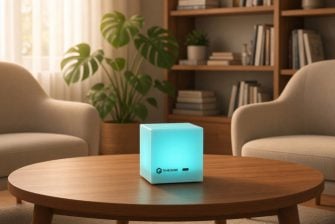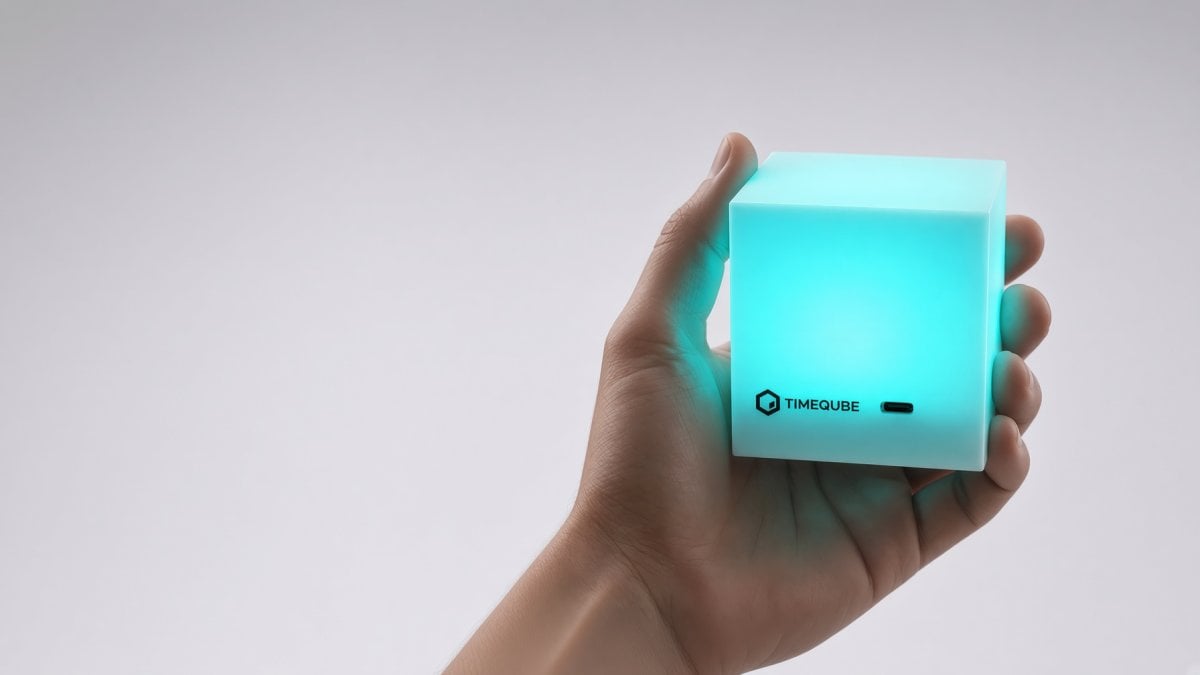

The moment you glance at your watch to check the time, the therapeutic bond is momentarily severed. It’s a subtle shift, but your client feels that loss of presence immediately. You likely feel the tension too, balancing the need for deep empathy with the professional necessity of ending on time. Traditional tools often fail this delicate balance. Ticking mechanical clocks create auditory stress, while digital countdowns demand too much conscious attention. Integrating a counseling session timer light into your practice offers a sophisticated alternative that respects the biological limitations of the human brain. These 100% non-distractive devices leverage peripheral vision to communicate time through gentle color transitions.
We understand that maintaining a tranquil, professional environment is essential for effective therapy. You deserve to remain 100% focused on the person in front of you without the anxiety of a session overrun. This article reveals how light-based visual timers preserve the therapeutic alliance by managing transitions through subconscious awareness. We will explore the cognitive science behind sensory stimuli, the benefits of removing friction from your workflow, and how minimalist design can enhance your presence. Discover how to end sessions gracefully while projecting an aura of professional harmony and intentionality.
Key Takeaways
- Understand how checking a traditional clock disrupts client vulnerability and why a counseling session timer light preserves the therapeutic alliance through subconscious awareness.
- Explore the biological advantages of parafoveal vision, a concept rooted in the observations of Leonardo da Vinci (1452-1519), to manage time without direct eye contact.
- Compare the psychological effects of mechanical visual discs and digital countdowns against the tranquil signals of 100% non-distractive light cues.
- Learn how to position timing tools within your peripheral field to maintain 100% focus on the client while managing session transitions with professional harmony.
- Discover the benefits of hand-crafted professional equipment, including the durability of the PCB 1.0 version and the minimalist elegance of PMMA casing.
Why Traditional Clocks Erode Trust in Counseling Sessions
The Psychology of the Gaze in Therapy
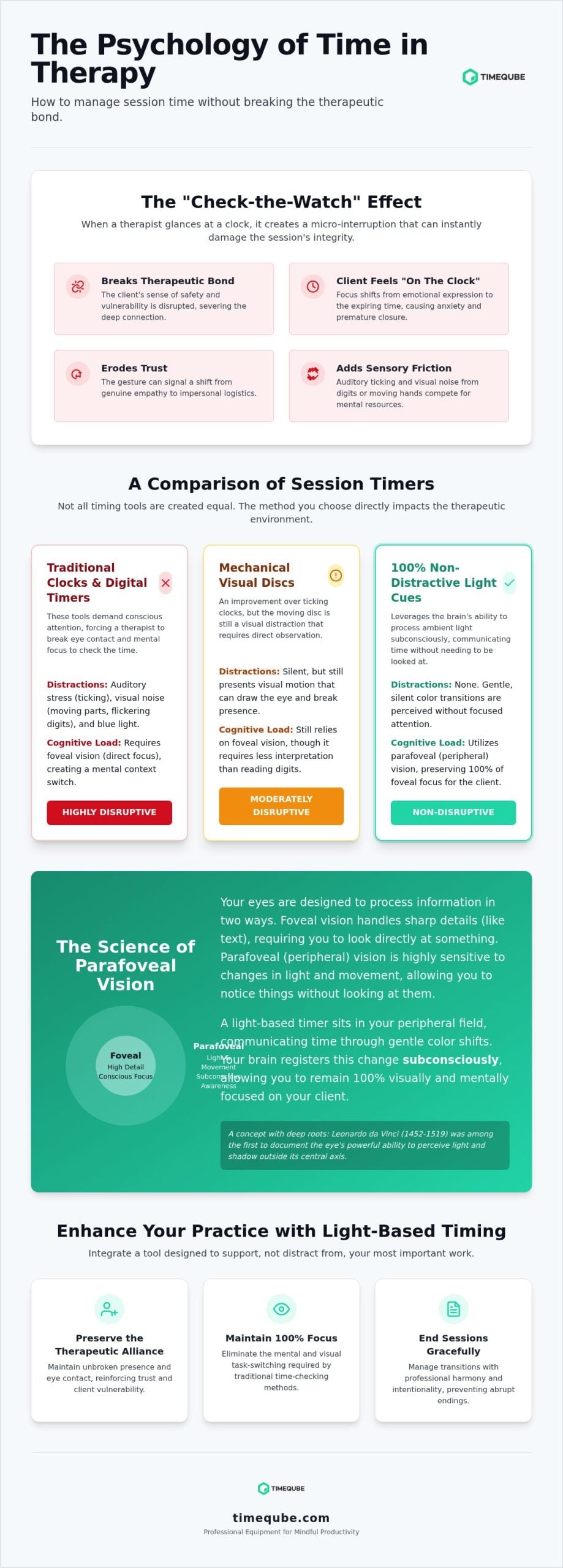
Eye contact serves as the primary conduit for rapport. It validates the client’s experience and signals active presence. When your gaze shifts to track a digital countdown, you aren’t just checking the time; you’re withdrawing your attention. This shift suggests a transition from a shared emotional journey to a transactional schedule. To maintain a truly safe space, the environment should remain ‘time-blind’ for the client. A counseling session timer light allows the therapist to stay grounded in the conversation. By utilizing the Science of Parafoveal Vision, professionals can track duration without breaking the gaze that sustains the therapeutic bond.
The Problem with Mechanical and Digital Timers
Traditional timing tools often introduce sensory friction into a tranquil setting. These devices create visual and auditory ‘noise’ that competes for the brain’s limited processing power. Consider the following distractions:
- Auditory Stress: The rhythmic ticking of a mechanical clock can trigger anticipatory anxiety, making it difficult for clients to remain present in the moment.
- Visual Noise: Moving hands or flickering digital digits demand foveal attention, drawing the eye away from the human connection.
- Digital Intrusions: Phone apps and smartwatches emit blue light and notifications, failing the ‘100% non-distractive’ standard required for deep clinical work.
Digital timers with bright, changing numbers act as a constant countdown to the end of the session. This creates a sense of urgency that is often counterproductive to the healing process. A dedicated counseling session timer light provides a softer, more human-centric solution. It replaces sharp digits with gentle color transitions that the brain processes subconsciously. This removal of friction ensures the session remains focused on the client’s mental well-being rather than the pressure of the passing minutes.
The Science of Parafoveal Vision: Timing Without Distraction
Parafoveal vision is the physiological foundation of effective time management in clinical settings. Human eyes are designed with two distinct systems for processing information. Foveal vision, which occupies the central two degrees of our sight, handles high-detail tasks like reading or recognizing faces. Peripheral vision, however, is optimized for detecting movement and light. By placing a counseling session timer light within the peripheral field, therapists can monitor session progress without diverting their central focus from the client. This allows for a seamless flow of communication that remains uninterrupted by the logistics of scheduling.
The study of these optical qualities has deep historical roots. Leonardo da Vinci (1452-1519) first documented the nuances of peripheral focus, observing that the eye perceives light and shadow differently outside the central axis. In a modern therapeutic context, this enables a 100% non-distractive experience. Information reaches the brain as a subtle environmental shift rather than a sharp interruption. This preservation of focus is vital for maintaining Therapeutic Presence, ensuring the client remains the primary focus of the professional’s attention at all times.
Foveal vs. Parafoveal Vision Explained
The fovea is densely packed with cones, which require direct fixation to resolve sharp details like clock digits or watch hands. Surrounding this area is the parafovea, where a higher concentration of rods and different cone distributions detect color and luminosity changes with extreme efficiency. Parafoveal vision is the key to subconscious time awareness. It allows the therapist to process a shift from green to yellow as a biological signal rather than a cognitive task. Because the brain doesn’t need to “read” the device, the cognitive load remains low, preventing the fatigue often caused by constant clock-watching.
Research-Backed Time Perception
Scientific literature supports the use of color as a non-intrusive timing signal. A study in the Journal of Physiological Anthropology (2007) indicates that specific color stimuli can influence the autonomic nervous system, promoting a state of calm. Research from IEEE (2017) confirms that peripheral vision stimulation effectively guides attention without causing the distraction associated with foveal fixation. These light cues interact with the brain’s EEG Alpha Band, which is associated with relaxed alertness and reduced anxiety—a principle also utilized by Neurobics in their professional neurofeedback training to help individuals regulate brain activity.
When a counseling session timer light transitions through the green, yellow, and red spectrum, it mirrors natural biological signals of progression and completion. This process removes the friction of traditional timekeeping by providing an unhurried, logical narrative for the session. If you’re ready to apply these scientific principles to your own practice, exploring the Timeqube Mind can help you create a more intentional, distraction-free environment for your clients.
Comparing Counseling Session Timers: Visual Discs vs. Light Cues
Selecting the right tool for a clinical setting requires understanding the difference between a silent device and a non-distractive one. While many practitioners seek “silent” options, silence alone doesn’t prevent the cognitive interruption caused by active monitoring. Mechanical visual timers, for example, often use a vanishing red disc to represent time. While these are quieter than ticking clocks, they still require foveal fixation. You must look directly at the disc to interpret how much time remains. This “reading” of time forces a mental shift that can pull you away from the client’s narrative. It’s a subtle distraction, but it’s enough to break the flow of a deep session.
Digital cubes offer a different approach, often using gravity sensors to start a countdown when flipped. However, these devices frequently feature sharp digital displays or harsh light. These elements can be intrusive in a tranquil environment. In contrast, a counseling session timer light shifts the experience from reading time to feeling it. By using gentle color transitions, these devices communicate progress through environmental changes rather than numerical data. This removal of friction ensures that time management remains a background process.
The Evolution of Therapy Timing Tools
Therapeutic timekeeping has transitioned from the intrusive chime of a grandfather clock to the chaotic notifications of a smartphone app. Modern professionals now recognize that standard office equipment often fails to meet the specific needs of a therapy room. This realization led to the development of specialized equipment like the Timeqube Mind. This device wasn’t created in a vacuum; it was designed through consultation with 60+ therapists. They sought a tool that provided professional precision without the clinical coldness of a digital stopwatch.
The construction of these tools reflects their purpose. While many timers use mass-produced plastic, professional-grade light timers utilize high-quality PMMA. This material offers superior light diffusion and durability. Every unit of the Mind edition is part of a limited-batch production, featuring a PCB 1.0 version designed for long-term reliability. Even the base is considered, using three disposable molds for silicone legs to ensure stability on any surface.
Feature Comparison: Presets and Customization
Efficiency in a session environment depends on seamless operation. Most professional timers include common presets such as 15, 30, 45, 60, and 90 minutes. However, the 50-minute ‘therapeutic hour’ is a critical preset for many practitioners. It allows for a graceful transition between clients, providing a ten-minute window for administrative tasks and a personal reset. Automated cycles remove the need for manual adjustments mid-session. Once set, a counseling session timer light operates independently. It guides the session from the initial green period through a yellow transition, ending in a calm red. This automated flow allows you to remain 100% focused on the human connection rather than the mechanics of the clock.
Practical Guidance for Stress-Free Session Management
Successful integration of a counseling session timer light depends on intentional placement within the therapeutic environment. The goal is to maximize your awareness while minimizing client distraction. To achieve this, follow the 30-degree rule. Position the timer approximately 30 degrees from your central line of sight. This placement keeps the device within your peripheral field, allowing you to monitor the session’s progress without breaking eye contact. It preserves the human connection while providing the technical data you need to manage the hour efficiently.
Where to Place Your Session Timer
Avoid placing the timer directly behind the client or in a spot that requires them to turn their head to see it. It should remain a tool for your professional management. By integrating the device with existing office decor, such as placing it on a low shelf or side table, it becomes an unobtrusive element of the room. The PMMA material ensures that the light is soft and diffused; this prevents the harsh glare often associated with digital screens. Proper placement ensures that you stay in control without making the client feel they are being rushed.
Integrating Color Cues into Your Workflow
The transition between session phases becomes more intuitive when guided by light. You may choose to be transparent with your clients about the device’s purpose, framing it as a way to ensure they get the full benefit of their time. Alternatively, many practitioners prefer to keep the signals subtle and private. The 100% non-distractive nature of the light allows for either approach.
- Green: This signifies the flow state. It’s the period for deep emotional exploration where the logistics of the clock should disappear from conscious thought.
- Yellow: This indicates the winding-down phase. It’s your cue to begin summarizing the session’s themes and preparing the client for the conclusion.
- Red: The final signal serves as the hard stop. It provides a clear, silent indicator for both parties to transition into the final scheduling and exit phase.
This structured approach removes the friction of checking a watch or phone. It allows you to lead the session with quiet confidence and professional harmony. To enhance your clinical environment and maintain 100% focus on your clients, you can Learn more about Timeqube for Mind/Body Therapies. Experience a more focused and tranquil practice by choosing the Timeqube Mind for your professional needs.
Timeqube Mind: Hand-Crafted Precision for Professionals
A professional tool should reflect the values of the practice it serves. Mass-produced plastic timers often lack the aesthetic and functional integrity required for a therapeutic space. The Timeqube Mind is different; it’s a hand-crafted piece of equipment, meticulously produced in limited batches. Just as one might appreciate the personalized craftsmanship of Just T-Shirt Quilts for preserving meaningful memories, this intentional approach ensures that every counseling session timer light is a unique, hand-finished object. By avoiding large-scale industrial manufacturing, we maintain a level of quality control that prioritizes durability and minimalist elegance.
The internal architecture is just as refined as the exterior. At the heart of the device is the PCB 1.0 version, designed by Jakub of JLDesigns. This board is engineered for long-term professional use, ensuring the light transitions remain fluid and reliable over years of clinical practice. Every component serves a specific purpose in creating a 100% non-distractive environment. The result is a sophisticated partner for your practice that values both your mental space and your professional reputation.
Built for Durability and Aesthetics
The “Milky Cube” outer casing is constructed from high-quality PMMA. Each piece is laser-cut and hand-glued to achieve a seamless, professional finish. This material choice provides superior light diffusion, turning the internal LEDs into a soft, atmospheric glow. Stability is provided by silicone tap legs, cast from three disposable molds to ensure a consistent, high-friction grip on any surface. Even the physical interface is considered; the switch features a non-glossy, 3D-printed finish for tactile ease of use without distracting reflections.
A Product with a Story
The production of the Timeqube Mind involves a dedicated network of skilled artisans. From the technical expertise of Jakub on the PCB to the precision of Łukasz Porębski in 3D printing, the device is a product of collaborative innovation, with each specialist understanding the unique requirements of a distraction-free therapeutic environment. The packaging team ensures that every unit arrives in pristine condition, ready for immediate integration into your workflow. Each device comes with an Early Adopter Certificate, featuring a unique name and founder signatures to mark its place in this limited-batch series.
Choosing a professional tool is an investment in your therapeutic presence. By removing the friction of generic office equipment, you create more room for human connection. You can Explore the hand-crafted production of Timeqube to see how these elements come together. When you use a counseling session timer light designed specifically for your needs, you project an aura of intentionality and quiet confidence.
Elevate Your Therapeutic Presence Through Intentional Design
This approach allows you to remain 100% present while managing session transitions with quiet confidence. Our solution was designed with 60+ professional therapists to ensure it meets the rigorous demands of clinical practice. Every unit is hand-crafted in limited batches and features a PCB 1.0 version for extreme durability. It’s time to reclaim your mental space and create a truly distraction-free environment. Upgrade your practice with the Timeqube Mind therapy timer and experience the harmony of professional precision. Your clients deserve your full attention, and now you have the tool to provide it.
Frequently Asked Questions
Is the light from a counseling timer distracting for clients with ADHD?
A counseling session timer light is specifically designed to be 100% non-distractive, making it suitable for clients with ADHD. Unlike digital countdowns that demand central focus, this device uses gentle color transitions. These signals are processed via the peripheral field of view, which reduces the cognitive load on the brain. This prevents the hyper-focus or anxiety often triggered by flickering digits or ticking sounds in a therapeutic environment.
Can I customize the brightness of the session timer light?
You can adjust the brightness of the light to match the specific ambiance of your consultation room. High-quality PMMA casing ensures that the light remains soft and diffused regardless of the intensity setting. This flexibility allows the therapist to maintain a tranquil environment during evening sessions or in brightly lit offices. The goal is to provide a subtle environmental cue that never competes with the human connection.
Does the Timeqube Mind make any sound when the color changes?
The Timeqube Mind operates in complete silence and doesn’t emit any sound when colors transition. Auditory triggers, such as ticking or beeping, are known sources of session anxiety that can disrupt a client’s flow. By removing all mechanical and digital noise, the device ensures that the only sounds in the room are the voices of the participants. This silent operation is essential for maintaining a safe, professional space.
What are the standard time presets for a therapy session timer?
Standard presets for a professional therapy timer include 15, 30, 45, 50, 60, and 90 minutes. The inclusion of a 50-minute option is particularly vital for practitioners who follow the traditional therapeutic hour. This preset allows for a meaningful session followed by a ten-minute transition period for administrative tasks. These automated cycles ensure that the therapist remains in control of the schedule without needing to reset a device manually.
Is a light-based timer better than a sand timer for counseling?
Light-based timers are superior to sand timers because they don’t require physical intervention or direct fixation. A sand timer requires you to look closely at the grains to estimate remaining time, which breaks your presence. Additionally, flipping a sand timer is a visible movement that can signal a transactional shift to the client. A light-based system provides a constant, subconscious awareness of time through the science of parafoveal vision.
How long does the battery last on a professional visual timer?
A professional visual timer typically provides enough power for several days of clinical use on a single charge. The internal PCB 1.0 version is optimized for energy efficiency to ensure the device remains reliable throughout back-to-back sessions. Most units are easily rechargeable via a standard USB connection, removing the friction of frequent battery replacements. This reliability allows you to focus entirely on your clients rather than the maintenance of your equipment.
Why is peripheral vision better for time tracking than central vision?
Peripheral vision is more efficient for time tracking because it processes color stimuli subconsciously. Central vision requires foveal fixation, which means you must stop looking at your client to read a clock. This movement interrupts the therapeutic bond. By placing a counseling session timer light in your peripheral field, you utilize the brain’s ability to detect environmental changes without diverting your conscious attention from the conversation.
Can I use the session timer light for group therapy or workshops?
The 360-degree visibility of the hand-crafted PMMA cube makes it an excellent tool for group therapy and workshops. Every participant can perceive the gentle color transitions from their own position in the room. This creates a shared, non-verbal understanding of time that helps keep group discussions on track without the need for verbal interruptions. It fosters a sense of collective focus and professional harmony in any collaborative setting.